Still don't believe me about Sarah Palin?
Apparently she now tells John Boehner what to do, and has the political capital to swing the entire GOP establishment behind a 3rd party candidate she favors. HERE.
Showing posts with label GOP. Show all posts
Showing posts with label GOP. Show all posts
Tuesday, November 3, 2009


Friday, July 10, 2009
Palin To Headline Reagan Day Dinner
Sarah Palin will give the keynote address in Iowa this fall at the Reagan Day Dinner, which is the major GOP fundraiser annually. It is reported she may be on her way to Virginia, too, to campaign for Republicans, in a state that saw huge Democratic gains in 2008.
Wednesday, July 8, 2009
Massachusets Sues For Repeal of DOMA
Pointed out to me by a friend:
The state of Massachusets has filed suit against the federal government, claiming the the Defense of Marriage Act unconstitutionally oversteps its bounds in a state's rights to define marriage.
My friend also thinks this is one of the windows for the GOP to get behind gay rights, and I have to agree. One of the things I soundly agree with Republicans on is state's right / feds out of my personal business. If the gay marriage argument continues to be framed on a state's rights platform, and carried out on a state-by-state basis, there is almost no way the GOP can't defend it, on ideology alone.
The state of Massachusets has filed suit against the federal government, claiming the the Defense of Marriage Act unconstitutionally oversteps its bounds in a state's rights to define marriage.
My friend also thinks this is one of the windows for the GOP to get behind gay rights, and I have to agree. One of the things I soundly agree with Republicans on is state's right / feds out of my personal business. If the gay marriage argument continues to be framed on a state's rights platform, and carried out on a state-by-state basis, there is almost no way the GOP can't defend it, on ideology alone.
Friday, July 3, 2009
Palin. No, Romney. OK, Palin
Interesting round table where the guests try as hard as they can to make it appear they think Mitt Romeny is the GOP frontrunner for 2012, but still can't stop talking about Sarah Palin.
My prediction is still on track.
My prediction is still on track.
Sunday, June 28, 2009
Why I Think The GOP Will Flip on Gay Rights
My friend Maxomai and I have a friendly debate going on over my assertion that the GOP is going to flip in favor of gay rights. He recently claimed: "I am convinced that the GOP is going to remain bitterly hostile towards gay and lesbian rights for at least another generation. The Christian Nationalist Right is too deeply entrenched in the GOP, and the GOP is too heavily reliant on the Christian Nationalist Right, for it to be any other way. But, if I am wrong, the GOP decides to leapfrog Democrats on gay and lesbian rights, then the youth vote will be wide open."
Here's the rub: I have more faith in Conservatives than him, and Maxomai has more faith in Liberals than me. Another friend of mine put it quite bluntly, saying, "If the GOP quits viewing the fundies as their base and instead sheds them like the albatross they are, I would agree with you." I would only add that I believe the Democrats need to shed the ultra-Left just as badly.
Well, the LA Times thinks that the religious right is going to do the dirty work for the GOP, and shove off on their own. They are advancing the idea that the rash of sex, drug, and dishonesty scandals over the last few years throughout the Republican party have left a bad taste in the mouth of Evangelicals and that they will retreat from politics again; they assert that the wave of religious-right involvement in government spurred by the final decadences of the 1970's has run its course, and they will now withdraw again, to keep their own noses clean. I can see a lot of sense in this. You can only support a group or organization who professes your beliefs but regularly abandons them, and remains unrepentant, for so long. Actions do speak louder than words. Just ask the gay constituency, who are responding with lightening speed to President Obama's tepid efforts to support gay rights. They yanked the rug out from under Democrats with no hesitation whatsoever. Or, more accurately, they closed their checkbooks.
Let me ask you this: What if Sen. Olympia Snowe (R-ME) ran for President in 2012? With the exception of one vote in 1996, when she she was a freshman Senator, and under extreme pressure from the freshly-minted GOP majority in Congress, Snowe has consistently voted in favor of gay rights. Human Rights Campaign gives her a lifetime rating of 78% in favor of gay rights, which is ahead of even many Democrats. Anyone who thinks Snowe is "too liberal" to get the GOP nomination, should think again. Her seniority in the Senate (36th overall, and 12th in the Republican caucus, ranking member of the Small Business Committee) gives her clout, and her moderate record gives her a bipartisan appeal. She would draw women, independents, and business interests. The state of Maine, which is a dependably Democratic state, has consistently re-elected her in the 70%+ range her entire 35-year career. She's the Hillary Clinton of Maine; she was elected Senator while she was still First Lady of the Pine Tree State. (Although she had already been in elected office 20 years at that point, and the governor was her 2nd marriage.)
Now, I'm not saying if Olympia Snowe runs for president the GOP will go pro-gay. The point I am getting at is this: moderate Republicans like Snowe are gaining a lot more attention, respect, and political sway than they have enjoyed in quite some time. Larger, more exciting news washed Arlen Specter's defection to the Democratic party out of the media loop, however, the importance of it should not be overlooked. Specter was a veteran Republican, who got pushed out of the GOP by the ultra-Right, and instead of crying, "good riddance," the GOP freaked. They quickly regained their composure and started bad-mouthing Specter, but the initial panic over the loss should tell us all we need to know: the GOP has lost its center, and unless they find a new message, and a new messenger, and fast, they are in trouble. Dick Cheney recently spoke out in favor of gay marriage. Dick Cheney. Likely because he has a gay daughter, Cheney has fairly consistently spoken and voted in favor of GLBT rights. My point is, if a hardliner, ultra-Conservative neocon like Cheney can support gay rights, any Republican can.
There is an opening for the GOP right now. The gay community is not happy with President Obama, and why should they be? We have a Democrat in the Oval Office, Democrats have control of Congress, and popular support for gay equality is at an all-time high nationwide, and yet the current administration persists in back-burnering pro-gay legislation, even goes so far as to defend anti-gay legislation already on the books, that the self-same president vowed on the campaign trail to repeal. Since 2004, the Log Cabin Republican, the GOP gay caucus, have been forging an increasingly stronger partnership with moderate congressional organizations like the Republican Main Street Partnership, which has a strong presence in the House of Representatives, and has attracted big name Senators such as Snowe and John McCain, and whose 8-member Board of Directors contains 6 members from states that currently have or are actively debating pro-gay rights legislation. In 2008, in spite of Obama's landslide win, the closest spread between Obama and McCain was Independents.
Minority voters tipped the balance in Obama's favor, and while we tend to think of "minorities" as racial minorities, at least 5 million self-identified gay and lesbian individuals voted in the 2008 presidential election. And 1.3 million of them voted for John McCain, or 27%, which is up 20% from 2004. If there is no repeal of DOMA, DADT, or any further regressive behavior from Democrats toward the GLBT constituency (even perceived regressiveness) those other 3.7 million voters just might look another direction in 2012. And, if the religious right stays home on election day, like the LA Times seems to think, Republicans will have even greater leisure to expand their base. 5 million votes, or more, is a pretty attractive lure. And, if statistics are right, there are somewhere between 35-50 million gay people in the United States, which means it is a huge untapped voter base, who just might come out on election day if the right political party said the right thing. And at this point, I don't hear Democrats saying it.
Here's the rub: I have more faith in Conservatives than him, and Maxomai has more faith in Liberals than me. Another friend of mine put it quite bluntly, saying, "If the GOP quits viewing the fundies as their base and instead sheds them like the albatross they are, I would agree with you." I would only add that I believe the Democrats need to shed the ultra-Left just as badly.
Well, the LA Times thinks that the religious right is going to do the dirty work for the GOP, and shove off on their own. They are advancing the idea that the rash of sex, drug, and dishonesty scandals over the last few years throughout the Republican party have left a bad taste in the mouth of Evangelicals and that they will retreat from politics again; they assert that the wave of religious-right involvement in government spurred by the final decadences of the 1970's has run its course, and they will now withdraw again, to keep their own noses clean. I can see a lot of sense in this. You can only support a group or organization who professes your beliefs but regularly abandons them, and remains unrepentant, for so long. Actions do speak louder than words. Just ask the gay constituency, who are responding with lightening speed to President Obama's tepid efforts to support gay rights. They yanked the rug out from under Democrats with no hesitation whatsoever. Or, more accurately, they closed their checkbooks.
Let me ask you this: What if Sen. Olympia Snowe (R-ME) ran for President in 2012? With the exception of one vote in 1996, when she she was a freshman Senator, and under extreme pressure from the freshly-minted GOP majority in Congress, Snowe has consistently voted in favor of gay rights. Human Rights Campaign gives her a lifetime rating of 78% in favor of gay rights, which is ahead of even many Democrats. Anyone who thinks Snowe is "too liberal" to get the GOP nomination, should think again. Her seniority in the Senate (36th overall, and 12th in the Republican caucus, ranking member of the Small Business Committee) gives her clout, and her moderate record gives her a bipartisan appeal. She would draw women, independents, and business interests. The state of Maine, which is a dependably Democratic state, has consistently re-elected her in the 70%+ range her entire 35-year career. She's the Hillary Clinton of Maine; she was elected Senator while she was still First Lady of the Pine Tree State. (Although she had already been in elected office 20 years at that point, and the governor was her 2nd marriage.)
Now, I'm not saying if Olympia Snowe runs for president the GOP will go pro-gay. The point I am getting at is this: moderate Republicans like Snowe are gaining a lot more attention, respect, and political sway than they have enjoyed in quite some time. Larger, more exciting news washed Arlen Specter's defection to the Democratic party out of the media loop, however, the importance of it should not be overlooked. Specter was a veteran Republican, who got pushed out of the GOP by the ultra-Right, and instead of crying, "good riddance," the GOP freaked. They quickly regained their composure and started bad-mouthing Specter, but the initial panic over the loss should tell us all we need to know: the GOP has lost its center, and unless they find a new message, and a new messenger, and fast, they are in trouble. Dick Cheney recently spoke out in favor of gay marriage. Dick Cheney. Likely because he has a gay daughter, Cheney has fairly consistently spoken and voted in favor of GLBT rights. My point is, if a hardliner, ultra-Conservative neocon like Cheney can support gay rights, any Republican can.
There is an opening for the GOP right now. The gay community is not happy with President Obama, and why should they be? We have a Democrat in the Oval Office, Democrats have control of Congress, and popular support for gay equality is at an all-time high nationwide, and yet the current administration persists in back-burnering pro-gay legislation, even goes so far as to defend anti-gay legislation already on the books, that the self-same president vowed on the campaign trail to repeal. Since 2004, the Log Cabin Republican, the GOP gay caucus, have been forging an increasingly stronger partnership with moderate congressional organizations like the Republican Main Street Partnership, which has a strong presence in the House of Representatives, and has attracted big name Senators such as Snowe and John McCain, and whose 8-member Board of Directors contains 6 members from states that currently have or are actively debating pro-gay rights legislation. In 2008, in spite of Obama's landslide win, the closest spread between Obama and McCain was Independents.
Minority voters tipped the balance in Obama's favor, and while we tend to think of "minorities" as racial minorities, at least 5 million self-identified gay and lesbian individuals voted in the 2008 presidential election. And 1.3 million of them voted for John McCain, or 27%, which is up 20% from 2004. If there is no repeal of DOMA, DADT, or any further regressive behavior from Democrats toward the GLBT constituency (even perceived regressiveness) those other 3.7 million voters just might look another direction in 2012. And, if the religious right stays home on election day, like the LA Times seems to think, Republicans will have even greater leisure to expand their base. 5 million votes, or more, is a pretty attractive lure. And, if statistics are right, there are somewhere between 35-50 million gay people in the United States, which means it is a huge untapped voter base, who just might come out on election day if the right political party said the right thing. And at this point, I don't hear Democrats saying it.
Tuesday, June 16, 2009
Tuesday Bits & Pieces - June 16th, 2009
Transparency -- not so much
"My Administration is committed to creating an unprecedented level of openness in Government. We will work together to ensure the public trust and establish a system of transparency, public participation, and collaboration. Openness will strengthen our democracy and promote efficiency and effectiveness in Government...Government should be transparent. Transparency promotes accountability and provides information for citizens about what their Government is doing. Information maintained by the Federal Government is a national asset. My Administration will take appropriate action, consistent with law and policy, to disclose information rapidly in forms that the public can readily find and use. Executive departments and agencies should harness new technologies to put information about their operations and decisions online and readily available to the public. Executive departments and agencies should also solicit public feedback to identify information of greatest use to the public." Barack Obama
So, is that why the Obama administration is continuing a Bush administration policy of refusing to publish visitor logs at the White House? In spite of multiple rulings by US federal judges stating that such records are subject to the Freedom of Information Act. Full story.
I'd say this goes on the same list as the President's near-total failure to keep his "five days sunlight before signing" promise (that laws passed by Congress would appear on the White House website for 5 days before they were signed into law). Only 8 out of 21 so far have even been posted, let alone sat there for 5 days. People might find this kind of nit-picking to be minor, but you can't just say this stuff then not do it. Tally here.
California Goes Broke, Washington In Denial
The state of California, 8th largest economy in the world, is looking at a $24 Billion dollar budget shortfall this July 1st, a deficit that would effectively close the state government down. Gov. Schwarzenegger and the Democratic state leadership have already threatened to cut state welfare programs, which would leave over 1.3 million of California's poorest residents without support or resources. Thus far, calls for federal aid have fallen on dead ears. (I suppose if it was Silicon Valley or Hollywood that was falling apart, we'd be all over it, but you can't buy the state of California with a brokered bankruptcy agreement...) Full story.
Cure For Most Common Form of Leukemia Found
Scientists affiliated with the Jackson Laboratory in Bar Harbor, Maine, one of the nation's leading genetic and cancer research institutes, have announced that they believe they have found a cure for chronic themyeloid leukemia. Full story.
Middle East 'Peace Process' Gets Muddy
This article seems to both praise and challenge President Obama on his Middle East foreign policy drives. As I have said many times, I think foreign policy is one of things the Obama administration is doing right. And I believe it is in large part due to the rock solid partnership between the President and Secretary Clinton. At the moment, with potentially corrupt elections, riots and international outcry in Iran, the President is facing a credibility challenge -- the credibility of his continued drive to reopen diplomatic relations with Tehran. What I find ironic about this whole situation is that these protests in Iran are the very grassroots building blocks of representative democracy, and yet somehow, the media is spinning it to look like the US failed in some way. When in reality, I've seen little change in US policy toward Iran. President Obama continues to speak for the diplomatic process, backed by strong words from the State department, and continued pressure on Israel not to complicate the situation further. The idea that is out-moded is that we need to choose between Israel and Iran, something that President Obama obviously is not willing to do. I believe that Iran, if it is not already, will become a nuclear state, which means we need further engagement with them, not to shun them just because we don't like the outcome of their elections. We've bungled things with Iran before, and the comparison (to Jimmy Carter) is not one the president can afford. We need to press on, no matter what happens in Iran. As strong a critic of Obama as I am, in this, I have to say: a little patience, please.
Washington D.C. Upholds Pro-Gay Law
Last month the D.C. Board of Elections and Ethics voted to recognize same-sex marriages performed in other states or municipalities. This week they denied a referendum challenge to this rule, stating that the referendum would "authorize discrimination based on sexual orientation, which is prohibited under D.C.'s Human Rights Act." Full story.
In related news, prominent gay activists are saying, "No thanks," to the DNC.
David Mixner made the following statement concerning his withdrawal from a Democratic fundraiser hosted by Vice President Biden for the DNC:
Amen, brother! How will they ever take us seriously if we keep forking out money while they harm us. According to an extensive study by UCLA, consumer buying power of the GLBT population will reach at least $712 Billion this year. (Equivalent to 91% of the TARP funds authorized by Congress in 2008, designed to rescue the American economy.) Yes, gay people have a voice, and it may well be heard through their checkbooks.
If I'm right, and I believe I am, the Republicans are going to flip in favor of same-sex marriage, Obama and Democrats are in danger of getting their base stolen.
"My Administration is committed to creating an unprecedented level of openness in Government. We will work together to ensure the public trust and establish a system of transparency, public participation, and collaboration. Openness will strengthen our democracy and promote efficiency and effectiveness in Government...Government should be transparent. Transparency promotes accountability and provides information for citizens about what their Government is doing. Information maintained by the Federal Government is a national asset. My Administration will take appropriate action, consistent with law and policy, to disclose information rapidly in forms that the public can readily find and use. Executive departments and agencies should harness new technologies to put information about their operations and decisions online and readily available to the public. Executive departments and agencies should also solicit public feedback to identify information of greatest use to the public." Barack Obama
So, is that why the Obama administration is continuing a Bush administration policy of refusing to publish visitor logs at the White House? In spite of multiple rulings by US federal judges stating that such records are subject to the Freedom of Information Act. Full story.
I'd say this goes on the same list as the President's near-total failure to keep his "five days sunlight before signing" promise (that laws passed by Congress would appear on the White House website for 5 days before they were signed into law). Only 8 out of 21 so far have even been posted, let alone sat there for 5 days. People might find this kind of nit-picking to be minor, but you can't just say this stuff then not do it. Tally here.
California Goes Broke, Washington In Denial
The state of California, 8th largest economy in the world, is looking at a $24 Billion dollar budget shortfall this July 1st, a deficit that would effectively close the state government down. Gov. Schwarzenegger and the Democratic state leadership have already threatened to cut state welfare programs, which would leave over 1.3 million of California's poorest residents without support or resources. Thus far, calls for federal aid have fallen on dead ears. (I suppose if it was Silicon Valley or Hollywood that was falling apart, we'd be all over it, but you can't buy the state of California with a brokered bankruptcy agreement...) Full story.
Cure For Most Common Form of Leukemia Found
Scientists affiliated with the Jackson Laboratory in Bar Harbor, Maine, one of the nation's leading genetic and cancer research institutes, have announced that they believe they have found a cure for chronic themyeloid leukemia. Full story.
Middle East 'Peace Process' Gets Muddy
This article seems to both praise and challenge President Obama on his Middle East foreign policy drives. As I have said many times, I think foreign policy is one of things the Obama administration is doing right. And I believe it is in large part due to the rock solid partnership between the President and Secretary Clinton. At the moment, with potentially corrupt elections, riots and international outcry in Iran, the President is facing a credibility challenge -- the credibility of his continued drive to reopen diplomatic relations with Tehran. What I find ironic about this whole situation is that these protests in Iran are the very grassroots building blocks of representative democracy, and yet somehow, the media is spinning it to look like the US failed in some way. When in reality, I've seen little change in US policy toward Iran. President Obama continues to speak for the diplomatic process, backed by strong words from the State department, and continued pressure on Israel not to complicate the situation further. The idea that is out-moded is that we need to choose between Israel and Iran, something that President Obama obviously is not willing to do. I believe that Iran, if it is not already, will become a nuclear state, which means we need further engagement with them, not to shun them just because we don't like the outcome of their elections. We've bungled things with Iran before, and the comparison (to Jimmy Carter) is not one the president can afford. We need to press on, no matter what happens in Iran. As strong a critic of Obama as I am, in this, I have to say: a little patience, please.
Washington D.C. Upholds Pro-Gay Law
Last month the D.C. Board of Elections and Ethics voted to recognize same-sex marriages performed in other states or municipalities. This week they denied a referendum challenge to this rule, stating that the referendum would "authorize discrimination based on sexual orientation, which is prohibited under D.C.'s Human Rights Act." Full story.
In related news, prominent gay activists are saying, "No thanks," to the DNC.
David Mixner made the following statement concerning his withdrawal from a Democratic fundraiser hosted by Vice President Biden for the DNC:
"I will not attend a fundraiser for the National Democratic Party in Washington next week when the current administration is responsible for these kind of actions," Mixner wrote of a motion to dismiss a challenge to the Defense of Marriage Act that drew a parallel between same-sex marriage to incestuous marriage. "How will they ever take us seriously if we keep forking out money while they harm us. For now on, my money is going to battles within the community such as the fight in Maine or the March on Washington! I am so tired of being told by Democratic operatives to 'suck it up' because so many other profound issues are at stake." Full story.
Amen, brother! How will they ever take us seriously if we keep forking out money while they harm us. According to an extensive study by UCLA, consumer buying power of the GLBT population will reach at least $712 Billion this year. (Equivalent to 91% of the TARP funds authorized by Congress in 2008, designed to rescue the American economy.) Yes, gay people have a voice, and it may well be heard through their checkbooks.
If I'm right, and I believe I am, the Republicans are going to flip in favor of same-sex marriage, Obama and Democrats are in danger of getting their base stolen.
Monday, June 15, 2009
GOP Over The Rainbow
Tuesday, April 28, 2009
Arlen Specter Does Benedict Arnold
Pennsylvania Senator Arlen Specter, longtime GOP heavyweight, announced today that he has become a Democrat. The former Republican said in a press conference, "I have found myself increasingly more at odds with the Republican philosophy."  In a separate statement he also said, "I am unwilling to have my twenty-nine year Senate record judged by the Pennsylvania Republican primary electorate. I have not represented the Republican Party. I have represented the people of Pennsylvania." The Washington Post describes Specter's final meeting with Senate Republicans yesterday to have consisted of, "stony silence."
Yes, he is making a political survival move. I'm not sure that's wrong however. He seems genuine when he says he is following the will of his state, which has had a nearly unprecedented shift toward the Democratic party, and toward liberal ideals. President Obama is said to have given Specter his full blessing. I say, "bravo!" to Arlen Specter for having the balls to do something like this. It is a huge risk. The GOP is mad as hell, and Democrats are suspicious.
Specter will retain his seniority in the Democratic party as though he were elected Dem in 1980. Specter was one of a wave of Republican officials who rode Ronald Reagan's impressive coat tails. He will become chairman of an influential subcommittee on the Appropriations Committee.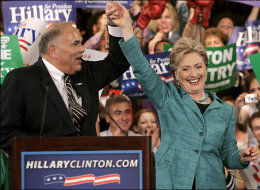 He also brings the Democratic caucus to 59 votes, one short of a filibuster-proof 60. If Al Franken (MN) is ever seated, Dems will have a controlling majority of Congress, the first since the first half of Jimmy Carter's presidency in '77-'79. Vice President Biden is reported to have played a key role in smoothing the transition and keeping peace while Specter made the decision. The two are said to be long time friends. The Huffington Post of all places, is giving Hillary Clinton credit, citing the fierce voter registration war waged between Clinton and Obama during the Pennsylvania Democratic primary last year as the major cause of Pennsylvania's massive shift to Blue.
Specter is the 4th most bipartisan-moderate member of the GOP caucus, according to the Congressional Database, and 4th overall in both Houses of Congress. He ranks behind Sen. Olympia Snowe (R-ME), Sen. Susan Collins (R-ME), and Sen. Ben Nelson (D-NE). According to the Washington Post both Senators Snowe and Collins have also been lobbied by the Democrats. Ironically, Olympia Snowe, who is the most centrist member of Congress (between both Houses) by a wide margin, only voting with her party 54.4% of the time, says joining the Democrat party is, "Something I would never do."
Specter's announcement came on the eve of President Obama's 100th day in office. Specter criticized ultra-conservative factions of the GOP for taking control of the caucus, and showed a little anger toward Republican politics and politicians since 2000. If there was ever a clearer slap in the face to the GOP, I've never seen it.
In a separate statement he also said, "I am unwilling to have my twenty-nine year Senate record judged by the Pennsylvania Republican primary electorate. I have not represented the Republican Party. I have represented the people of Pennsylvania." The Washington Post describes Specter's final meeting with Senate Republicans yesterday to have consisted of, "stony silence."Yes, he is making a political survival move. I'm not sure that's wrong however. He seems genuine when he says he is following the will of his state, which has had a nearly unprecedented shift toward the Democratic party, and toward liberal ideals. President Obama is said to have given Specter his full blessing. I say, "bravo!" to Arlen Specter for having the balls to do something like this. It is a huge risk. The GOP is mad as hell, and Democrats are suspicious.
Specter will retain his seniority in the Democratic party as though he were elected Dem in 1980. Specter was one of a wave of Republican officials who rode Ronald Reagan's impressive coat tails. He will become chairman of an influential subcommittee on the Appropriations Committee.
He also brings the Democratic caucus to 59 votes, one short of a filibuster-proof 60. If Al Franken (MN) is ever seated, Dems will have a controlling majority of Congress, the first since the first half of Jimmy Carter's presidency in '77-'79. Vice President Biden is reported to have played a key role in smoothing the transition and keeping peace while Specter made the decision. The two are said to be long time friends. The Huffington Post of all places, is giving Hillary Clinton credit, citing the fierce voter registration war waged between Clinton and Obama during the Pennsylvania Democratic primary last year as the major cause of Pennsylvania's massive shift to Blue.Specter is the 4th most bipartisan-moderate member of the GOP caucus, according to the Congressional Database, and 4th overall in both Houses of Congress. He ranks behind Sen. Olympia Snowe (R-ME), Sen. Susan Collins (R-ME), and Sen. Ben Nelson (D-NE). According to the Washington Post both Senators Snowe and Collins have also been lobbied by the Democrats. Ironically, Olympia Snowe, who is the most centrist member of Congress (between both Houses) by a wide margin, only voting with her party 54.4% of the time, says joining the Democrat party is, "Something I would never do."
Specter's announcement came on the eve of President Obama's 100th day in office. Specter criticized ultra-conservative factions of the GOP for taking control of the caucus, and showed a little anger toward Republican politics and politicians since 2000. If there was ever a clearer slap in the face to the GOP, I've never seen it.
Tuesday, April 14, 2009
A Gayer GOP
Meghan McCain, daughter of Sen. John McCain says in order to regain lost political traction, we need a "gayer GOP." She says, "Republican resistance to gay marriage goes against conservative values—and our own self-interest." Her argument is further analyzed and supported by Kristen Soltis at the New Right, HERE. First, let me say, bravo Meghan and Kristen. This is a theory I have long believed; first, that increased personal liberty and choice is highly consistent with Republican core values, and second, that (as I have said many times,) the GOP needs to reevaluate some of their tired old rhetoric that even they don't believe any more. Gay marriage, even (gasp!) gay sex, does not threated Conservative morals. No more than women voting or blacks becoming citizens does. The spectrum of personalities within the GLBT "community" certainly includes conservatives, just as many or more than the ultra-liberal gay people who get so much face time in the media. No one wants to watch an MTV special about the sober, straight-laced, middle class conservative gay guys who work on a farm. Drag queens and exaggeratedly stereotypical over-the-top 20-somethings are a lot more exciting, and polarizing. As much as this kind of polarization is necessary and (according to me,) welcomed, it is not in fact representative of the overall homosexual populace in America. As gay people and gay lives get more and more exposure, more and more freedom and legal protections, and more and more notice in day to day life, we can see for real that gay people really are just like everyone else. Meghan McCain is probably right: if the GOP relaxed its rhetoric about homosexuals, they might achieve the first steps in a contemporary Conservative revival, one that might actually be forward-thinking, like the Republicans used to be, "back in the day."
Allow me to finish with a quote by Meghan McCain, which sums up exactly what I mean:
There just might be hope for the GOP yet.
Allow me to finish with a quote by Meghan McCain, which sums up exactly what I mean:
I am a woman who despises labels and boxes and stereotypes. Recently, I seemed to have rocked a few individuals within my party by saying that I am a pro-life, pro-gay-marriage Republican. So if anyone is still confused, let me spell it out for you. I believe life begins at conception and I believe that people who fall in love should have the option to get married. Lest we forget, our founding document, the Declaration of Independence, grants the same rights to everyone in this country—“All men are created equal.” If you think certain rights should not apply to certain people, then you are saying those people are not equal. People may always have a difference of opinion on certain lifestyles, but championing a position that wants to treat people unequally isn't just un-Republican. At its fundamental core, it's un-American.
There just might be hope for the GOP yet.
Friday, February 20, 2009
Gerrymandering For Good
I'm not sure how much of Judd Gregg's withdrawal from consideration for Commerce Secretary really had to do with the 2010 Census, but what I do think is that Gregg let the cat out of the bag.
Gerrymandering is "a form of redistribution in which electoral district or constituency boundaries are deliberately modified for electoral advantage. Gerrymandering may be used to help or hinder particular constituents, such as members of a political, racial, linguistic, religious or class group." The Constitution of the United States, Article 1, Section 2 states: "The actual Enumeration [of the US population] shall be made within three Years after the first Meeting of the Congress of the United States, and within every subsequent Term of ten Years, in such Manner as they shall by Law direct." The Department of Commerce is responsible for the conducting of the census, through the Census Bureau. Once the Census is completed, the population data contained therein is used for Congressional redistricting. Because it is impossible to actually physically speak in person to every person within the borders of the US, data samplings are used to project actual population totals and demographic breakdowns (i.e.: the racial and religious makeup of America.) It is a generally accepted platitude that in projecting minority population totals, Republicans trend toward under-sampling (making America officially whiter, richer and more Christian), and Democrats trend toward over-sampling (making America officially more diverse, and giving census-driven representation to racial minorities.)
The 2010 Census will be the first Census conducted under a Democratic government in 30 years. (The 1980 Census was conducted under Jimmy Carter.) President Obama has been unofficial about any of it so far, giving generic reassurances that there will be no monkey business. Regardless, it appears that the 20120 Census will be directly supervised by White House Chief of Staff Rahm Emanuel. While no doubt the census data will be used to benefit Democrats down the line, I also believe that President Obama wants more direct control of the census so that we can actually count the racial diversity of America. I believe this to be the real culture war, an actual battle. The White House intends to see a representative census, and the GOP is furious over it. I hope the President gets his way on this.
Gerrymandering is "a form of redistribution in which electoral district or constituency boundaries are deliberately modified for electoral advantage. Gerrymandering may be used to help or hinder particular constituents, such as members of a political, racial, linguistic, religious or class group." The Constitution of the United States, Article 1, Section 2 states: "The actual Enumeration [of the US population] shall be made within three Years after the first Meeting of the Congress of the United States, and within every subsequent Term of ten Years, in such Manner as they shall by Law direct." The Department of Commerce is responsible for the conducting of the census, through the Census Bureau. Once the Census is completed, the population data contained therein is used for Congressional redistricting. Because it is impossible to actually physically speak in person to every person within the borders of the US, data samplings are used to project actual population totals and demographic breakdowns (i.e.: the racial and religious makeup of America.) It is a generally accepted platitude that in projecting minority population totals, Republicans trend toward under-sampling (making America officially whiter, richer and more Christian), and Democrats trend toward over-sampling (making America officially more diverse, and giving census-driven representation to racial minorities.)
The 2010 Census will be the first Census conducted under a Democratic government in 30 years. (The 1980 Census was conducted under Jimmy Carter.) President Obama has been unofficial about any of it so far, giving generic reassurances that there will be no monkey business. Regardless, it appears that the 20120 Census will be directly supervised by White House Chief of Staff Rahm Emanuel. While no doubt the census data will be used to benefit Democrats down the line, I also believe that President Obama wants more direct control of the census so that we can actually count the racial diversity of America. I believe this to be the real culture war, an actual battle. The White House intends to see a representative census, and the GOP is furious over it. I hope the President gets his way on this.
Wednesday, January 28, 2009
The More GOPers Complain, The Higher The Bill Goes
The House of Representatives will vote today on President Obama's economic stimulus bill. President Obama, as promised, met with House Republicans yesterday to peddle the bill, and in an uncharacteristic show of humility, made a stop at the Ohio Clock, traditional headline-grabbing spot of Senators at the Capitol, and announced how well the talks were going. Maybe it was just old habits dying hard, as the President also made a Freudian slip at the Ohio Clock, referring to "my Senate colleagues," and correcting himself after, "I mean, my former Senate colleagues." Called the American Recovery and Reinvestment Bill of 2009, Obama's plan is expected to pass the House in spite of GOP resistance, and a few Democrats, too. In anticipation of the bill hitting the Senate floor within a few days, tax committees within the Senate have already tacked another $70 Billion onto the plan, bringing the total a Chairman's penstroke shy of $1 Trillion dollars. The Wall Street Journal published a scathing review of the legislation today, criticizing huge portions of the bill as non-productive, with low return potential and calling some of it outright vanity spending.
Democrats are saying the bill isn't big enough, Republicans are saying it's too big. At the same time, the National Republican Senatorial Committee is launching its first 2010 campaign ad, directly targeting Harry Reid and his "big spending." This stimulus bill better work, or Democrats are in trouble. We already thought we were seeing a Clinton Revival in Obama's administration staffing picks; we just might see an even more significant one at mid-term elections if they're not careful. House Republicans, upset over being shut out of the crafting of the bill, are already targeting Speaker Pelosi and Vice President Biden over it. And, Politico is claiming the stimulus is killing the Obama honeymoon, or Pelosi is. Rep. Patrick McHenry (R-NC) when asked what happened to Obama’s honeymoon answered, “Ask Pelosi." It seems the more Republicans complain about this bill, the higher the price tag goes. Back in September, when it was the GOP calling for "broad economic measures," the number was $500 Billion. Then Nancy Pelosi got hold of it and started floating progressively higher numbers until we get to today -- the day of the vote, and the Senate is already planning to hike the number again. Like I said, this better work.
Democrats are saying the bill isn't big enough, Republicans are saying it's too big. At the same time, the National Republican Senatorial Committee is launching its first 2010 campaign ad, directly targeting Harry Reid and his "big spending." This stimulus bill better work, or Democrats are in trouble. We already thought we were seeing a Clinton Revival in Obama's administration staffing picks; we just might see an even more significant one at mid-term elections if they're not careful. House Republicans, upset over being shut out of the crafting of the bill, are already targeting Speaker Pelosi and Vice President Biden over it. And, Politico is claiming the stimulus is killing the Obama honeymoon, or Pelosi is. Rep. Patrick McHenry (R-NC) when asked what happened to Obama’s honeymoon answered, “Ask Pelosi." It seems the more Republicans complain about this bill, the higher the price tag goes. Back in September, when it was the GOP calling for "broad economic measures," the number was $500 Billion. Then Nancy Pelosi got hold of it and started floating progressively higher numbers until we get to today -- the day of the vote, and the Senate is already planning to hike the number again. Like I said, this better work.
Sunday, January 25, 2009
Vast Left-Wing Conspiracy... or business as usual?
I just had a "duh," moment.
I read the news every day, and I research a good deal of what I read. I consider myself not only intelligent, but subtle. Regardless, it just occurred to me that the economic stimulus that is being ping-ponged around Washington right now is the front for the Democratic takeover of government.
Watching the House Appropriations Committee markup session on C-SPAN, allow me to rescind some of what I said about the "new feel-good Washington." House Republicans do not feel good about this bill. I have to hand it to 'em, they've got some very valid points. Chiefly, some GOP members are pointing out that the bill before the House contains no bipartisan oversight, as the officers in charge of executing the bill are all appointed by the President. Republican after Republican is standing up and complaining that there is not enough oversight, not enough internal monitoring, insufficient fiscal reporting, and no opportunity for sub-committee meetings on portions directly connected to those committees.
To the victor goes the spoils, indeed. Rep. David Obey (D-WI), Chair of the House Appropriations Committee is barely concealing his desire to see the discussion halted. David Brooks, at the New York Times today, described Obey as, "...a very compelling figure, who would be a judge on 'American Idol' if this were hell. He runs the committee like Captain Ahab in a bad mood." Speaker Pelosi is defending the GOP shut-out on terms of necessity, which I agree with, but her demeanor is so combative, it makes her seen patronizing to the GOP at best. On Inauguration Day, Obey was whipping up panic for the bill, indicating that he believed $825 Billion dollars might not be sufficient, and pressing for the bill to be passed to "stave off the worst aspects of the recession." While I believe all sides agree on the urgency of the bill, I question such shrill panic. Mid-February is the deadline assigned by the President, which means three weeks or thereabouts; there's time for a lot of meetings.
If any one issue can be pointed to as the tipping point for Obama's campaign it was his economic platform. Although Obama led in the polls fairly consistently throughout the campaign, he generally underperformed, and after the Republican National Convention, McCain passed him in the polls as much as 10 points, long enough to be reason for panic. Only when the economy tanked hard in late September did Obama regain a winning margin. Getting his economic plan signed into law, early, and with a perceived strong bipartisan support, will be a benchmark for Obama. His first radio address as President focussed almost in total on the economy. Speaker Pelosi is saying again that there will be "no recess" for Congress until the bill is passed. At the same time, Dems are spinning out lowered expectations, just in case. Mid-term elections are two years off, and we will have seen durable reverberations from the Stimulus Bill by then. Lawmakers on both sides of the aisle are conscious of this, which is why the GOP is preaching caution and the Democrats are... well, preaching, mostly to the choir, as is apparent if you actually watch the discussions.
I read the news every day, and I research a good deal of what I read. I consider myself not only intelligent, but subtle. Regardless, it just occurred to me that the economic stimulus that is being ping-ponged around Washington right now is the front for the Democratic takeover of government.
Watching the House Appropriations Committee markup session on C-SPAN, allow me to rescind some of what I said about the "new feel-good Washington." House Republicans do not feel good about this bill. I have to hand it to 'em, they've got some very valid points. Chiefly, some GOP members are pointing out that the bill before the House contains no bipartisan oversight, as the officers in charge of executing the bill are all appointed by the President. Republican after Republican is standing up and complaining that there is not enough oversight, not enough internal monitoring, insufficient fiscal reporting, and no opportunity for sub-committee meetings on portions directly connected to those committees.
To the victor goes the spoils, indeed. Rep. David Obey (D-WI), Chair of the House Appropriations Committee is barely concealing his desire to see the discussion halted. David Brooks, at the New York Times today, described Obey as, "...a very compelling figure, who would be a judge on 'American Idol' if this were hell. He runs the committee like Captain Ahab in a bad mood." Speaker Pelosi is defending the GOP shut-out on terms of necessity, which I agree with, but her demeanor is so combative, it makes her seen patronizing to the GOP at best. On Inauguration Day, Obey was whipping up panic for the bill, indicating that he believed $825 Billion dollars might not be sufficient, and pressing for the bill to be passed to "stave off the worst aspects of the recession." While I believe all sides agree on the urgency of the bill, I question such shrill panic. Mid-February is the deadline assigned by the President, which means three weeks or thereabouts; there's time for a lot of meetings.
If any one issue can be pointed to as the tipping point for Obama's campaign it was his economic platform. Although Obama led in the polls fairly consistently throughout the campaign, he generally underperformed, and after the Republican National Convention, McCain passed him in the polls as much as 10 points, long enough to be reason for panic. Only when the economy tanked hard in late September did Obama regain a winning margin. Getting his economic plan signed into law, early, and with a perceived strong bipartisan support, will be a benchmark for Obama. His first radio address as President focussed almost in total on the economy. Speaker Pelosi is saying again that there will be "no recess" for Congress until the bill is passed. At the same time, Dems are spinning out lowered expectations, just in case. Mid-term elections are two years off, and we will have seen durable reverberations from the Stimulus Bill by then. Lawmakers on both sides of the aisle are conscious of this, which is why the GOP is preaching caution and the Democrats are... well, preaching, mostly to the choir, as is apparent if you actually watch the discussions.
Wednesday, April 23, 2008
Pennsylvania Very Good for Clinton, Dems In General
One thing the Pennsylvania primaries made very clear: the GOP really is going to have to struggle to keep up. Both Democrats each individually drew more votes yesterday than the total Republican voters between all GOP candidates (Ron Paul and Mike Huckabee were both on the PA ballot for the GOP, and got crushed by McCain, of course.) Just over 804,000 voters participated in the GOP primary, versus 2.3 Million voters on the Democrat side. That means Democrats outnumbered Republicans at the polls almost 3-to-1.
Another thing that seems clear: Obama's $11 million dollar act of desperation won him a lopsided victory in Philadelphia. If you look at the county level results, Clinton demolished him in the state wide contest. The majority of her victories are in the 60-75% range, with Obama taking the urban demographic by a 14 point lead. Once more, Jay Cost at RealClearPolitics.com has already published a very thorough analysis of the PA demographics here, which demonstrates Clinton's true success in Pennsylvania. She exceeded expectations, and once again did what they said she needed to do: score a double digit victory. And, just like every other time, as soon as Clinton jumps another hurdle they put another one in front of her.
Something that should not be ignored is that as of yesterday, Clinton closed the popular vote gap, and pulled ahead. How, you ask? Yes, with those pesky little impatient states Florida and Michigan. Even if delegates never get seated from the two contested states, the voters cannot be ignored. Can you imagine the GOP media heyday? "Democrats don't like to count all the votes." The only reason FL and MI have not been settled yet is because Obama keeps saying no. He doesn't want those states to count, because it is becoming increasingly clear that they erase his popular vote lead, something he desperately needs in order to keep his front-runner status. His electability was already in question, and now that Clinton has cinched up another critical big, working class state, it is in dire jeopardy. I honestly cannot see how the superdelegates could get behind Obama if his electability is seriously challenged, and it has been. The Obama campaign is still pounding on the "can't pass me in delegate count" drum, but the fact is, Clinton can pass him in the delegate count, so long as she maintains her superdelegate lead, which she is doing. She's hanging onto it by the skin of her teeth, but she's doing it.
Obama made a huge stand in Pennsylvania, even going so far as to briefly pontificate that they might pull off a win in the Keystone State. By a multi-million dollar long shot, the Obama campaign staged the biggest, most expensive, most intense campaign for Pennsylvania, and in the end could not deny Clinton a double digit win. Obama has accused Clinton of throwing the kitchen sink at him, but it looks to me like it was the other way around, and he still lost. Clinton won every major demographic in Pennsylvania, even taking the post graduate vote which usually goes to Obama. She also demolished him on the issues, beating him on the Economy (the biggest issue in PA and in the election overall by far) by 16 points, and Health care by 8. Obama took Iraq by 10 points, and still maintained his lead in young voters. The working class, and women surged out in favor of Clinton, giving her a smashing lead in the area of 25-30 points. Obama managed to draw the averages down to 10 points by taking Philadelphia whose population is heavily disproportionate to the rest of the state. Was it a well spent 11 million? When it's all said and done, I doubt it. I think the huge struggle which resulted in a still-resounding loss says all it needs to say.
Watching the post primary coverage last night, something struck me as very apropos. While Clinton was giving her victory speech the crowd started chanting, "Yes we will, Yes we will, Yes we will!" Later, watching Obama's speech, the crowd was chanting, "Yes we can, yes we can, yes we can!" I immediately thought to myself, Yep, maybe Obama can, but Clinton will. Clinton avoided discussing Obama almost completely in her victory speech except to acknowledge that it was a hard fought battle on both sides. When it appeared she was going to say something negative, she got booed, but it quickly turned back to loud cheering when she plugged her website and made a plea for donations. Another thing that is clear, even Clinton supporters are tied of the negative campaigning. Obama's post primary speech consisted mostly of his new stump points, which are largely anti-Clinton, and barely veiled.
Anyone who was ready to write Clinton off got another nasty surprise. In less than 12 hours, the Clinton campaign is reporting $3.5 million in donations, she has regained her national head-to-head win over McCain, and she's added another key state to her big state strategy. The punditry is calling it everything from a big win to a stalemate, but I believe the reality is this is a major win for Clinton. Her biggest campaign strength, electability, just got a massive injection of validity and her momentum has gone from a slow roll to a steady gait.
Another thing that seems clear: Obama's $11 million dollar act of desperation won him a lopsided victory in Philadelphia. If you look at the county level results, Clinton demolished him in the state wide contest. The majority of her victories are in the 60-75% range, with Obama taking the urban demographic by a 14 point lead. Once more, Jay Cost at RealClearPolitics.com has already published a very thorough analysis of the PA demographics here, which demonstrates Clinton's true success in Pennsylvania. She exceeded expectations, and once again did what they said she needed to do: score a double digit victory. And, just like every other time, as soon as Clinton jumps another hurdle they put another one in front of her.
Something that should not be ignored is that as of yesterday, Clinton closed the popular vote gap, and pulled ahead. How, you ask? Yes, with those pesky little impatient states Florida and Michigan. Even if delegates never get seated from the two contested states, the voters cannot be ignored. Can you imagine the GOP media heyday? "Democrats don't like to count all the votes." The only reason FL and MI have not been settled yet is because Obama keeps saying no. He doesn't want those states to count, because it is becoming increasingly clear that they erase his popular vote lead, something he desperately needs in order to keep his front-runner status. His electability was already in question, and now that Clinton has cinched up another critical big, working class state, it is in dire jeopardy. I honestly cannot see how the superdelegates could get behind Obama if his electability is seriously challenged, and it has been. The Obama campaign is still pounding on the "can't pass me in delegate count" drum, but the fact is, Clinton can pass him in the delegate count, so long as she maintains her superdelegate lead, which she is doing. She's hanging onto it by the skin of her teeth, but she's doing it.
Obama made a huge stand in Pennsylvania, even going so far as to briefly pontificate that they might pull off a win in the Keystone State. By a multi-million dollar long shot, the Obama campaign staged the biggest, most expensive, most intense campaign for Pennsylvania, and in the end could not deny Clinton a double digit win. Obama has accused Clinton of throwing the kitchen sink at him, but it looks to me like it was the other way around, and he still lost. Clinton won every major demographic in Pennsylvania, even taking the post graduate vote which usually goes to Obama. She also demolished him on the issues, beating him on the Economy (the biggest issue in PA and in the election overall by far) by 16 points, and Health care by 8. Obama took Iraq by 10 points, and still maintained his lead in young voters. The working class, and women surged out in favor of Clinton, giving her a smashing lead in the area of 25-30 points. Obama managed to draw the averages down to 10 points by taking Philadelphia whose population is heavily disproportionate to the rest of the state. Was it a well spent 11 million? When it's all said and done, I doubt it. I think the huge struggle which resulted in a still-resounding loss says all it needs to say.
Watching the post primary coverage last night, something struck me as very apropos. While Clinton was giving her victory speech the crowd started chanting, "Yes we will, Yes we will, Yes we will!" Later, watching Obama's speech, the crowd was chanting, "Yes we can, yes we can, yes we can!" I immediately thought to myself, Yep, maybe Obama can, but Clinton will. Clinton avoided discussing Obama almost completely in her victory speech except to acknowledge that it was a hard fought battle on both sides. When it appeared she was going to say something negative, she got booed, but it quickly turned back to loud cheering when she plugged her website and made a plea for donations. Another thing that is clear, even Clinton supporters are tied of the negative campaigning. Obama's post primary speech consisted mostly of his new stump points, which are largely anti-Clinton, and barely veiled.
Anyone who was ready to write Clinton off got another nasty surprise. In less than 12 hours, the Clinton campaign is reporting $3.5 million in donations, she has regained her national head-to-head win over McCain, and she's added another key state to her big state strategy. The punditry is calling it everything from a big win to a stalemate, but I believe the reality is this is a major win for Clinton. Her biggest campaign strength, electability, just got a massive injection of validity and her momentum has gone from a slow roll to a steady gait.
Friday, March 28, 2008
A Triangulated Battle
So what exactly are these dire consequences to the Democratic party if Clinton and Obama drag their horse race out five more months? I don't think it is that the two are "destroying each other." I don't think it is lasting bitterness on behalf of the eventual loser's supporters. I don't think it is that the superdelegates are going to crash and burn modern democracy if they don't follow the popular vote. All of this bickering and hostility and mud slinging will be instantly forgotten once the nomination is awarded.
Calls for either Clinton or Obama to drop out have been soundly booed, even by party leadership. Even though the media is focusing on Howard Dean's call for delegates to endorse, he specifically identified his time line as after the primary season. This week, big money Clinton supporters threw down the gauntlet to Nancy Pelosi and basically said if she openly endorses Obama before the Convention, they won't open their wallets to House Democrats. MoveOn.org went wild over this and issued a rebuke. Pelosi seems to have rejected this threat, but also flexed her claws over threats to House Democrats, which tells me she takes it seriously. No matter what happens, I believe the message is loud and clear: no one is dropping out yet.
What the party leaders are afraid of is triangulation. I have long felt that voters are evaluating all three presidential candidates on a continuum from left to right, independent of party affiliation. Both the Democrats and the GOP are experiencing disturbing trends of defection. The Democratic party considers GOP defectors a success and view the Dems who are showing sympathies to McCain a sign that the internal race is harming the cause. I find it to be an exciting phenomenon, and a clear indicator that American voters are engaged in the political process. I believe this phenomenon is benefiting the Democratic party, but only because they are the only potent national venue where change is endorsed.
I also believe a sub-textual fear is that if Clinton gets the nomination, resentful voices will say Republicans tipped the balance. If that is true, it also calls into question the motives of GOP defectors, which Rush Limbaugh has already paved the road for. "Triangulation" is a dirty word to most Democrats, and it was a major bone of contention between the party and Bill Clinton. Regardless, I believe it cannot be ignored that Obama, Clinton and McCain represent a liberal-moderate-conservative scale, in that order. All scandals aside, all analysis of race, gender, and age (again, in that order) aside, what we see right now are three very viable, intelligent, and prepared candidates, all of whom have a very distinct Presidency mapped out.
Reality is finally intruding on the '08 election cycle. The economy is swiftly emerging as the big election issue. All three candidates have begun platforming economic plans, solutions to the mortgage crisis, and dovetailing their personal campaign slants in. Obama is subtly inserting his Change theme into his economic position. Clinton is doing the same with Health Care, arguably her strongest position, smartly using it as her launching pad for the rest of her economic plans. And, McCain is splashing foreign relations broadly across his whole strategy, and doing some very impressive image spinning. Both Democrats have started to focus on McCain instead of each other, which tells me, the General Election has begun.
Increasingly, I see Clinton and Obama drawing the knife edge closer instead of further apart. Currently, in head-to-heads, Obama has regained his visible lead over McCain, according to RealClearPolitics.com. However, less than one point separates all of them, and both Democrats come in at exactly 45.0%, showing they both perform the same in a head-to-head. The undecided percentages, and the margin or error erases any determining call. Pennsylvania and North Carolina have re-polarized after a few days flux toward Clinton, and are now mirrors of each other again, with the split hovering around 50-30, favoring Clinton in Penn and Obama in NC. Clinton is standing to gain more in Pennsylvania, but she has a harder climb than Obama, so the delegate-smaller state of NC is still a considerable win for Obama, too. Once more, an eye for an eye. Again, according to RCP, factoring in Florida, Michigan and estimates from states that do not report exact totals, the popular vote total is split almost exact down the middle, separated by less than 1 percent, around 200,000 votes. Depending on any number of factors from visceral things like money to the completely spontaneous, Clinton could easily make up that difference. Jay Cost has made a very compelling and thorough analysis of how the popular vote count could vary dramatically. Both have suffered very nasty blows to their image and are both still standing. Both have spouses who have been unpalatable to their campaigns. Both have had inverted victories, hedging into each other's bases equally. I believe even the Democratic voting pattern shows equal-opposite strengths. Clinton performs well with big working class states, and Obama performs well in caucuses and broadly with white men. Both inspire so much loyalty that their supporters are willing at least to threaten defection. Both represent a contradiction to the Democratic party. Clinton's sense of entitlement to the presidency is fairly consistent with the party sentiment, but find the attitude distasteful coming from Clinton. Obama represents change and coalition, but the risks involved in backing him are considerable. The true significance of the Wright scandal is that race had to come up eventually, and it will again.
Every high profile Democrat has reinforced the push for unity behind whoever wins the nomination. I believe the reason Howard Dean has said July 1st will be his personal deadline for all delegates to make up their minds is because he fears not the Convention, but a brokered convention, which is when the really ugly fighting would start. The "Al Gore Shadow Candidate" rumor is popping up again, and I still don't believe it. But, I do believe people are doing the math and realizing that even the superdelegate vote could split in such a way that neither candidate got the 2025 magic number. It could happen.
Everyone already knew this, but now that it is happening, they are realizing that instead of preventing it, they should be planning for it. Preventive strategies have failed, instead fueling the debates. Democratic leadership now has to lean toward preparing for the superdelegates to take center stage, exercise their best judgment, select a nominee, and do all of this in the most politic possible way. Doing so by July 1st gives six weeks to test the waters for the presumed nominee. Someone has to concede eventually, and if buyers remorse is going to set in, better it be while there is still an option: before the Convention. Clinton is poised for a big win in Pennsylvania, one that will net her momentum for coming wins, a delegate gain, and a major proof in her "more electable" argument. Rightly, she could at this point throw Obama's words back at him in answer to his campaign calls for her to drop out, "Why would I drop out? I'm winning." Both know the pitfalls and advantages of the frontrunner - underdog symbiosis, and both are exercising them daily. Clinton is suffering very bad right now as the underdog, but this plays directly into her comeback phenomenon. The worse it looks for her, the greater even a small victory looks. Conversely, Obama is riding the wave of his near to insurmountable lead, returning to his grand oratory style, and writing speeches that are already headed for the history books. But, he has also found out that being in the lead, even in the presumed winner's slot, does not shield him from major blows to his image or questions of his integrity, in fact it intensifies the desire for scrutiny of both. Coming out of the recent round of battle bruised but still swinging is good for him, but he should be careful to think it's over. He may have won the battle, but the war is still very much on.
McCain has realized he can't stay out of the fray. Clinton and Obama if nothing else, are giving each other excellent practice rounds. As I have said in a previous article, Clinton and Obama represent very different challenges to McCain. His answer to this is to begin positioning himself as the President people expect. Now that he has gotten the Bush endorsement, he has also begun to distance himself from Bush politics, which both Democrats have harshly criticized. McCain knows his weaknesses, and he is sidestepping them rather well. He has come across as calm, confident, and eloquent, and that is the real danger. Both Democrats have begun, by necessity to respond to McCain's forays against them, and this has drawn attention to all three as serious options. Like it or not, the presidential race is currently three-way. It is incumbent on Democrats to narrow the field to two, but all three are campaigning for President, and all three are drawing their own unique following. I believe this is what accounts for the seemingly strange movements in party affiliation and in cross-over voting. Allow me to reiterate that I find this exciting and interesting, and I see it as a sign that Americans overall are more interested in who is President, not in what party wins.
Calls for either Clinton or Obama to drop out have been soundly booed, even by party leadership. Even though the media is focusing on Howard Dean's call for delegates to endorse, he specifically identified his time line as after the primary season. This week, big money Clinton supporters threw down the gauntlet to Nancy Pelosi and basically said if she openly endorses Obama before the Convention, they won't open their wallets to House Democrats. MoveOn.org went wild over this and issued a rebuke. Pelosi seems to have rejected this threat, but also flexed her claws over threats to House Democrats, which tells me she takes it seriously. No matter what happens, I believe the message is loud and clear: no one is dropping out yet.
What the party leaders are afraid of is triangulation. I have long felt that voters are evaluating all three presidential candidates on a continuum from left to right, independent of party affiliation. Both the Democrats and the GOP are experiencing disturbing trends of defection. The Democratic party considers GOP defectors a success and view the Dems who are showing sympathies to McCain a sign that the internal race is harming the cause. I find it to be an exciting phenomenon, and a clear indicator that American voters are engaged in the political process. I believe this phenomenon is benefiting the Democratic party, but only because they are the only potent national venue where change is endorsed.
I also believe a sub-textual fear is that if Clinton gets the nomination, resentful voices will say Republicans tipped the balance. If that is true, it also calls into question the motives of GOP defectors, which Rush Limbaugh has already paved the road for. "Triangulation" is a dirty word to most Democrats, and it was a major bone of contention between the party and Bill Clinton. Regardless, I believe it cannot be ignored that Obama, Clinton and McCain represent a liberal-moderate-conservative scale, in that order. All scandals aside, all analysis of race, gender, and age (again, in that order) aside, what we see right now are three very viable, intelligent, and prepared candidates, all of whom have a very distinct Presidency mapped out.
Reality is finally intruding on the '08 election cycle. The economy is swiftly emerging as the big election issue. All three candidates have begun platforming economic plans, solutions to the mortgage crisis, and dovetailing their personal campaign slants in. Obama is subtly inserting his Change theme into his economic position. Clinton is doing the same with Health Care, arguably her strongest position, smartly using it as her launching pad for the rest of her economic plans. And, McCain is splashing foreign relations broadly across his whole strategy, and doing some very impressive image spinning. Both Democrats have started to focus on McCain instead of each other, which tells me, the General Election has begun.
Increasingly, I see Clinton and Obama drawing the knife edge closer instead of further apart. Currently, in head-to-heads, Obama has regained his visible lead over McCain, according to RealClearPolitics.com. However, less than one point separates all of them, and both Democrats come in at exactly 45.0%, showing they both perform the same in a head-to-head. The undecided percentages, and the margin or error erases any determining call. Pennsylvania and North Carolina have re-polarized after a few days flux toward Clinton, and are now mirrors of each other again, with the split hovering around 50-30, favoring Clinton in Penn and Obama in NC. Clinton is standing to gain more in Pennsylvania, but she has a harder climb than Obama, so the delegate-smaller state of NC is still a considerable win for Obama, too. Once more, an eye for an eye. Again, according to RCP, factoring in Florida, Michigan and estimates from states that do not report exact totals, the popular vote total is split almost exact down the middle, separated by less than 1 percent, around 200,000 votes. Depending on any number of factors from visceral things like money to the completely spontaneous, Clinton could easily make up that difference. Jay Cost has made a very compelling and thorough analysis of how the popular vote count could vary dramatically. Both have suffered very nasty blows to their image and are both still standing. Both have spouses who have been unpalatable to their campaigns. Both have had inverted victories, hedging into each other's bases equally. I believe even the Democratic voting pattern shows equal-opposite strengths. Clinton performs well with big working class states, and Obama performs well in caucuses and broadly with white men. Both inspire so much loyalty that their supporters are willing at least to threaten defection. Both represent a contradiction to the Democratic party. Clinton's sense of entitlement to the presidency is fairly consistent with the party sentiment, but find the attitude distasteful coming from Clinton. Obama represents change and coalition, but the risks involved in backing him are considerable. The true significance of the Wright scandal is that race had to come up eventually, and it will again.
Every high profile Democrat has reinforced the push for unity behind whoever wins the nomination. I believe the reason Howard Dean has said July 1st will be his personal deadline for all delegates to make up their minds is because he fears not the Convention, but a brokered convention, which is when the really ugly fighting would start. The "Al Gore Shadow Candidate" rumor is popping up again, and I still don't believe it. But, I do believe people are doing the math and realizing that even the superdelegate vote could split in such a way that neither candidate got the 2025 magic number. It could happen.
Everyone already knew this, but now that it is happening, they are realizing that instead of preventing it, they should be planning for it. Preventive strategies have failed, instead fueling the debates. Democratic leadership now has to lean toward preparing for the superdelegates to take center stage, exercise their best judgment, select a nominee, and do all of this in the most politic possible way. Doing so by July 1st gives six weeks to test the waters for the presumed nominee. Someone has to concede eventually, and if buyers remorse is going to set in, better it be while there is still an option: before the Convention. Clinton is poised for a big win in Pennsylvania, one that will net her momentum for coming wins, a delegate gain, and a major proof in her "more electable" argument. Rightly, she could at this point throw Obama's words back at him in answer to his campaign calls for her to drop out, "Why would I drop out? I'm winning." Both know the pitfalls and advantages of the frontrunner - underdog symbiosis, and both are exercising them daily. Clinton is suffering very bad right now as the underdog, but this plays directly into her comeback phenomenon. The worse it looks for her, the greater even a small victory looks. Conversely, Obama is riding the wave of his near to insurmountable lead, returning to his grand oratory style, and writing speeches that are already headed for the history books. But, he has also found out that being in the lead, even in the presumed winner's slot, does not shield him from major blows to his image or questions of his integrity, in fact it intensifies the desire for scrutiny of both. Coming out of the recent round of battle bruised but still swinging is good for him, but he should be careful to think it's over. He may have won the battle, but the war is still very much on.
McCain has realized he can't stay out of the fray. Clinton and Obama if nothing else, are giving each other excellent practice rounds. As I have said in a previous article, Clinton and Obama represent very different challenges to McCain. His answer to this is to begin positioning himself as the President people expect. Now that he has gotten the Bush endorsement, he has also begun to distance himself from Bush politics, which both Democrats have harshly criticized. McCain knows his weaknesses, and he is sidestepping them rather well. He has come across as calm, confident, and eloquent, and that is the real danger. Both Democrats have begun, by necessity to respond to McCain's forays against them, and this has drawn attention to all three as serious options. Like it or not, the presidential race is currently three-way. It is incumbent on Democrats to narrow the field to two, but all three are campaigning for President, and all three are drawing their own unique following. I believe this is what accounts for the seemingly strange movements in party affiliation and in cross-over voting. Allow me to reiterate that I find this exciting and interesting, and I see it as a sign that Americans overall are more interested in who is President, not in what party wins.
Tuesday, March 25, 2008
Positive Effects of Dems Battle On McCain Campaign
Hey, that rhymes, "McCain Campaign." Something that has been largely ignored is the idea that the protracted battle between Senators Clinton and Obama could have some negative effects on the GOP side. The idea at this time is that the longer it takes the Democrats to get behind one or the other, the harder it will be to win in November. While this idea has credence, there could be some positive effects as well.
Foremost, I believe that the longer McCain is unsure who he is running against, the longer both Dems have to build a case against him, and the less time he has to frame his campaign. Ironically for the GOP, who by and large probably have some serious misgivings about McCain, I think only John McCain stands a chance of being competitive in November. Any other Republican would be annihilated in the current political wind. Hillary Clinton said, "The [GOP] should be so embarrassed by the Bush administration they should not even tender a candidate this year," in the Austin debate on February 26th, for which she got a standing ovation. The sentiment is likely true. I believe anyone but McCain would be eaten alive by any Democrat. Unfortunately, the GOP did tender a candidate, and it was one who presents a serious threat to Democratic entitlement in November.
Here are a few things I feel may be positively effecting the Dems, and negatively effecting the GOP because of the extended Democratic race:
McCain will not pick a VP until the Democratic nomination is settled
McCain is tight lipped on the issue. This is normal in one way, that he is reserving the announcement for after he officially gets the nod. Clinton and Obama are both silent on a VP pick for the same reason. Regardless, it would be much easier and much more acceptable for McCain to at least let the media name his #2 at this point, but he can't until he knows if he will be facing Clinton or Obama in the November. While the choice of a VP normally has little effect on the results of an election, it is a bigger issue for McCain because of his age, and because of the polarity of his opponents. Clinton and Obama represent different challenges for him and his VP pick will likely be his answer to those differing contrasts.
Divide and Conquer
Again, while the protracted Dem campaign has been pitched as giving McCain time to test drive strategies against both of them (even by me), I don't see that happening. I see McCain unable to focus in on one or the other other and start tearing them apart. He has only been able to target broad issues like Iraq and NAFTA, where both Democrats have nearly identical positions. McCain's main strategy up to this point seems to be: stay friendly. He had an opportunity with both Ferraro and Wright to cast either of them in very negative light and both times rejected the idea as small minded. He has not attacked Clinton's experience or Obama's liberal change platform. This is almost eerie. What is he planning? Surely, McCain is intelligent enough to know he is not going to coast to an easy victory in November. McCain has taken a pot shot here and there at specifics of each candidate's platforms, but has not been able to narrow his focus as much as he could if there were only one. I believe the extended visibility of multiple Democratic candidates has crippled GOP strategy somewhat, forcing them to focus on image and general issues.
McCain vs. ...?
Obama and Clinton represent very different campaigns to McCain.
Democrats have all seen the "Obama Effect" and know what it can do to an otherwise strong opponent. GOP cockiness has dismissed him as too liberal, too inexperienced, too black. (Sounds familiar doesn't it?) I doubt at this point these kinds of attacks are a surprise to Obama, and I believe he has shown he can survive the attack machines. What he will have a very hard time with is McCain's experience, which includes a very long political career, military experience, and an impressive track record of supporting bipartisan legislature. McCain, oddly enough, will look more liberal compared to Obama. Not more liberal than Obama, but more liberal than he really is. If he has to face Obama in November, his best strategy will be a bifocal push with experience on one side and his "maverick" image on the other. McCain will have a much better chance of pulling Independents away from Obama than he would against Clinton. Obama would polarize the general election with his much greater contrast to McCain, and his strengths would be in difference creating cooperation, and the "enough with the same old same old" stance. Obama's anti-war stance may well be a liability by November, but he will have an easy time painting McCain in very ugly colors on his social and fiscal platforms. Obama represents a contrast in total to McCain, which will make McCain's campaign easier to frame, but harder to carry out.
Clinton has more moderate appeal, and that presents a whole different set of problems for McCain. While there is a rumor that GOP double agents are supporting the Clinton campaign because she will be easier to defeat in November, I think this is dead wrong. Holding up a Clinton in front of a Republican is like holding up a cross in front of a vampire, "It burns, it burns!" Clinton has been clear that one of her campaign pillars is vendetta against the Bush administration and GOP pandering to it, and McCain is already dovetailing into the Bush schematic very nicely. Against Clinton, McCain will have to combat the Clinton brand. Bill Clinton may be a liability now, but in the general election, a return of the Clinton agenda will look a lot sweeter. Clinton also arguably has more pull with Independents who are hesitant to back the more liberal Obama. In addition, I believe there is fairly clear support for true GOP defectors to Clinton. Something that has been overlooked in the race so far is Clinton's appeal to women in general; recent reports from Pennsylvania show that a mass of the GOP defectors in the Keystone State are women, and I doubt they are doing it because Rush Limbaugh told them to. Against Clinton, McCain will be challenged to distinguish himself from Bush style government without undercutting his conservative supporters, who are his bread and butter.
An Energized Voter Base
By time time all the primaries are over and Democrats go to Denver for the final match in the ring, record voter turnouts will be undeniable. The battle between Clinton and Obama has drawn out voting bases unseen in elective history. People who have never voted before are getting involved in the Democratic race. While there is still squabbling over where those people will fall in November, the fact remains that visibility of and importance of this race are over the top. I believe the importance of voting, and of getting your voice heard will carry over to the general election. Democrats will be able to harness the massive voter surge, which would benefit either of them. The fact that millions of new voters are already registered or registering to vote now means they will not have that hurdle to jump in the fall. It also means they are already paying attention. With a little spin, either Democrat could easily take the tooth-and-nail element of their internal battle and turn that tide against McCain.
In conclusion, let me say that I hope Democrats will be as unified in November as they say they will be. A new Gallup poll is suggesting an alarming defection to McCain if Obama gets the nomination. A smaller portion of polled voters indicated the same thing if Clinton gets the nod, but I don't think that threat is as real. Clinton loyalty is a brand of its own, versus Obama-mania which I believe will much more easily translate to "unity" if Clinton goes to bat in November. I don't think the fallout will be as dire as either side predicts, but Clinton has always lead in supporter loyalty. This has been spun as a negative, because it could "cost Democrats the presidency." That is based on the assumption that Obama will be the nominee, which is no more real at this point than Clinton's claim. Demonstrating voter retention is a strength. I believe that either Clinton or Obama will be a powerhouse against McCain, and while I do see the head-to-head results favoring Clinton at this time, I think Obama would still have a very good chance. While I can't avoid my own bias completely, this essay is not about Clinton vs. Obama. It is about Democrats vs. McCain, and in that battle, I still think the Democrats have a leg up.
Foremost, I believe that the longer McCain is unsure who he is running against, the longer both Dems have to build a case against him, and the less time he has to frame his campaign. Ironically for the GOP, who by and large probably have some serious misgivings about McCain, I think only John McCain stands a chance of being competitive in November. Any other Republican would be annihilated in the current political wind. Hillary Clinton said, "The [GOP] should be so embarrassed by the Bush administration they should not even tender a candidate this year," in the Austin debate on February 26th, for which she got a standing ovation. The sentiment is likely true. I believe anyone but McCain would be eaten alive by any Democrat. Unfortunately, the GOP did tender a candidate, and it was one who presents a serious threat to Democratic entitlement in November.
Here are a few things I feel may be positively effecting the Dems, and negatively effecting the GOP because of the extended Democratic race:
McCain will not pick a VP until the Democratic nomination is settled
McCain is tight lipped on the issue. This is normal in one way, that he is reserving the announcement for after he officially gets the nod. Clinton and Obama are both silent on a VP pick for the same reason. Regardless, it would be much easier and much more acceptable for McCain to at least let the media name his #2 at this point, but he can't until he knows if he will be facing Clinton or Obama in the November. While the choice of a VP normally has little effect on the results of an election, it is a bigger issue for McCain because of his age, and because of the polarity of his opponents. Clinton and Obama represent different challenges for him and his VP pick will likely be his answer to those differing contrasts.
Divide and Conquer
Again, while the protracted Dem campaign has been pitched as giving McCain time to test drive strategies against both of them (even by me), I don't see that happening. I see McCain unable to focus in on one or the other other and start tearing them apart. He has only been able to target broad issues like Iraq and NAFTA, where both Democrats have nearly identical positions. McCain's main strategy up to this point seems to be: stay friendly. He had an opportunity with both Ferraro and Wright to cast either of them in very negative light and both times rejected the idea as small minded. He has not attacked Clinton's experience or Obama's liberal change platform. This is almost eerie. What is he planning? Surely, McCain is intelligent enough to know he is not going to coast to an easy victory in November. McCain has taken a pot shot here and there at specifics of each candidate's platforms, but has not been able to narrow his focus as much as he could if there were only one. I believe the extended visibility of multiple Democratic candidates has crippled GOP strategy somewhat, forcing them to focus on image and general issues.
McCain vs. ...?
Obama and Clinton represent very different campaigns to McCain.
Democrats have all seen the "Obama Effect" and know what it can do to an otherwise strong opponent. GOP cockiness has dismissed him as too liberal, too inexperienced, too black. (Sounds familiar doesn't it?) I doubt at this point these kinds of attacks are a surprise to Obama, and I believe he has shown he can survive the attack machines. What he will have a very hard time with is McCain's experience, which includes a very long political career, military experience, and an impressive track record of supporting bipartisan legislature. McCain, oddly enough, will look more liberal compared to Obama. Not more liberal than Obama, but more liberal than he really is. If he has to face Obama in November, his best strategy will be a bifocal push with experience on one side and his "maverick" image on the other. McCain will have a much better chance of pulling Independents away from Obama than he would against Clinton. Obama would polarize the general election with his much greater contrast to McCain, and his strengths would be in difference creating cooperation, and the "enough with the same old same old" stance. Obama's anti-war stance may well be a liability by November, but he will have an easy time painting McCain in very ugly colors on his social and fiscal platforms. Obama represents a contrast in total to McCain, which will make McCain's campaign easier to frame, but harder to carry out.
Clinton has more moderate appeal, and that presents a whole different set of problems for McCain. While there is a rumor that GOP double agents are supporting the Clinton campaign because she will be easier to defeat in November, I think this is dead wrong. Holding up a Clinton in front of a Republican is like holding up a cross in front of a vampire, "It burns, it burns!" Clinton has been clear that one of her campaign pillars is vendetta against the Bush administration and GOP pandering to it, and McCain is already dovetailing into the Bush schematic very nicely. Against Clinton, McCain will have to combat the Clinton brand. Bill Clinton may be a liability now, but in the general election, a return of the Clinton agenda will look a lot sweeter. Clinton also arguably has more pull with Independents who are hesitant to back the more liberal Obama. In addition, I believe there is fairly clear support for true GOP defectors to Clinton. Something that has been overlooked in the race so far is Clinton's appeal to women in general; recent reports from Pennsylvania show that a mass of the GOP defectors in the Keystone State are women, and I doubt they are doing it because Rush Limbaugh told them to. Against Clinton, McCain will be challenged to distinguish himself from Bush style government without undercutting his conservative supporters, who are his bread and butter.
An Energized Voter Base
By time time all the primaries are over and Democrats go to Denver for the final match in the ring, record voter turnouts will be undeniable. The battle between Clinton and Obama has drawn out voting bases unseen in elective history. People who have never voted before are getting involved in the Democratic race. While there is still squabbling over where those people will fall in November, the fact remains that visibility of and importance of this race are over the top. I believe the importance of voting, and of getting your voice heard will carry over to the general election. Democrats will be able to harness the massive voter surge, which would benefit either of them. The fact that millions of new voters are already registered or registering to vote now means they will not have that hurdle to jump in the fall. It also means they are already paying attention. With a little spin, either Democrat could easily take the tooth-and-nail element of their internal battle and turn that tide against McCain.
In conclusion, let me say that I hope Democrats will be as unified in November as they say they will be. A new Gallup poll is suggesting an alarming defection to McCain if Obama gets the nomination. A smaller portion of polled voters indicated the same thing if Clinton gets the nod, but I don't think that threat is as real. Clinton loyalty is a brand of its own, versus Obama-mania which I believe will much more easily translate to "unity" if Clinton goes to bat in November. I don't think the fallout will be as dire as either side predicts, but Clinton has always lead in supporter loyalty. This has been spun as a negative, because it could "cost Democrats the presidency." That is based on the assumption that Obama will be the nominee, which is no more real at this point than Clinton's claim. Demonstrating voter retention is a strength. I believe that either Clinton or Obama will be a powerhouse against McCain, and while I do see the head-to-head results favoring Clinton at this time, I think Obama would still have a very good chance. While I can't avoid my own bias completely, this essay is not about Clinton vs. Obama. It is about Democrats vs. McCain, and in that battle, I still think the Democrats have a leg up.
Sunday, March 16, 2008
McCain Already Acting Like President
Someone should knock on the Democratic party's door and remind them that the competition is on the other side of the aisle, and right now it's on the other side of the pond for a fundraiser.
It would sound something like this, "Hello? Yes. I was wondering if you have seen Senator McCain?" No, they haven't.
Why?
Because he is in Iraq "assessing the troop surge." It can't be too bad a PR trip, with more than half the foreign-deployed US military being in Iraq. McCain is traveling under the auspice of the U.S. Senate Armed Services Committee, and the visit is his 8th in 5 years. McCain is pro-Iraq, but has criticized the Bush administration's handling of the war. Now that the troop surge McCain advocated is working, he is free to capitalize on being right, and gets the Bush stamp of approval. McCain is a popular candidate in the military demographic. While Senator McCain's official role on this trip is legitimate, there is no doubt the timing is political. Senators Clinton and Obama are tangling like angry cats, no one can hear over the din, and McCain strolls off to Iraq to start personally handling the war.
Also in McCain's palm pilot over the next week are meetings with Jordanian King Abdullah, Israeli Prime Minister Ehud Olmert, British Prime Minister Gordon Brown and French President Nicolas Sarkozy. While he is jaunting around the globe meeting with important world leaders and reinforcing the GOP agenda, Clinton and Obama will be busily destroying each other, nearly oblivious. The fighting between Clinton and Obama has created such a thick smoke screen that McCain doesn't even have to be in the country to campaign. The GOP and Bush are free to start a phased transition of control from Bush to McCain. As far as they are concerned, he is President-elect. I have no doubt that McCain is willing to adopt the Bush agenda in exchange for a bully pulpit endorsement.
Who's to say Clinton and Obama could not present a united front against McCain while still continuing their own campaigns? I think it is perceived as impossible at this time because of the vice-presidential bickering, which both have said is premature, but were forced to discuss it anyway. Both Democrats shied away from the VP question because they both knew that it was going to lead to trouble. But, the media and the pundits pushed the issue and they capitulated. This sparked off the latest infighting that has now escalated to name calling. See, it is so fascinating even I get distracted talking about it, and forget what I was really talking about: John McCain.
I'm going to say this every chance I get, until I'm heard: do not underestimate John McCain. In the most recent head-to-heads, all three presidential candidates are in a dead heat. But, it's sliding McCain's way against Obama, and Clinton's way against McCain. A week ago, Obama beat McCain in head-to-heads by 5 points, and Clinton was losing by 2 points. The head-to-head schematic is sliding back toward where it was in December, with Clinton the clear winner. But, it's much closer this time. As I said, it's a dead heat, less than 1 point separating any of them. That's excellent news for McCain and the GOP, and should be a dire warning to Democrats that their assumed victory in November is in jeopardy.
How do Democrats bail the ship? I think the answer is simple. Go back in time. Not literally, but back to when the Democratic race was about the issues. It didn't seem like it at the time, but it was. I'd love to hear one of Obama's inspirational speeches right now. I'd love to hear Clinton croaking on about health care and heartfelt moments with single mothers. Both campaigns are losing track of their core platforms and they need to get back to them.
I think there are signs that both want to, signaled by a willingness to participate in 2 debates, in spite of the obvious risks of what topics could come up. No doubt, there will be mutually agreed upon topics to be left alone. We need to see some "Democratic unity" between Clinton and Obama, something they have both shown when they appear together. If they are smart, and they both are, they will use their considerable media networks to author the upcoming debates to focus on the general election and the issues, not the identity of the candidates.
Democratic leadership has already indicated that the entire nominating process is going to be allowed to play out, up to and including the likelihood of the superdelegates deciding the race, with or without popular backing. What happens is going to be allowed to happen. So, for any Democratic candidacy to survive McCain's bid for the Oval Office, Clinton and Obama need to shape up. Instead of the race or gender card, it's time for someone to play the good sportsmanship card. It is possible to run a polite campaign. Classic principles of debate could and should be applied to the Democratic race right now. Clinton and Obama should bury the hatchet, shake hands, and agree to keep it clean. The GOP kept their process clean and focussed on the issues, and produced a nominee who is much stronger than anyone anticipated.
I was warning about McCain two years ago, and all of my arguments are coming true. I said McCain was a popular war hero with a long Congressional career, foreign relations expertise and a moderate image that would resonate with Independents and swing voters. Congratulating myself for predicting McCain's win is not what I want to do, and would be a hollow reward. I would much rather the attitude that Democrats are guaranteed to win in November be immediately dismissed. Fueled by Bush's deplorable image domestically and worldwide, and by the prevalent idea that Bush stole the presidency from Gore, Democrats feel a sense of entitlement to the Presidency. This is a terrible attitude to take toward actually winning.
Even though Clinton is getting slammed for being willing to do anything to win, I don't think anyone would damn her for using the same strategies against McCain. Conversely, if Rev. Wright flung a few honkey comments at McCain, probably everyone would chuckle and forget it. People delight in the humiliation of public figures, and as long as the fighting looks fair, all bets are off. There is a subtle but strong eye-for-an-eye current running in the Democratic campaign anyway. I think Dems will be willing to overlook almost anything as long as it helps secure a Blue president. America was founded on many Classical principles, and our government, a republic, was modeled after Classical and Roman deliberative bodies. I don't think party leadership even cares who the nominee is at this point, as long as one of them fairly wins the argument.
It would sound something like this, "Hello? Yes. I was wondering if you have seen Senator McCain?" No, they haven't.
Why?
Because he is in Iraq "assessing the troop surge." It can't be too bad a PR trip, with more than half the foreign-deployed US military being in Iraq. McCain is traveling under the auspice of the U.S. Senate Armed Services Committee, and the visit is his 8th in 5 years. McCain is pro-Iraq, but has criticized the Bush administration's handling of the war. Now that the troop surge McCain advocated is working, he is free to capitalize on being right, and gets the Bush stamp of approval. McCain is a popular candidate in the military demographic. While Senator McCain's official role on this trip is legitimate, there is no doubt the timing is political. Senators Clinton and Obama are tangling like angry cats, no one can hear over the din, and McCain strolls off to Iraq to start personally handling the war.
Also in McCain's palm pilot over the next week are meetings with Jordanian King Abdullah, Israeli Prime Minister Ehud Olmert, British Prime Minister Gordon Brown and French President Nicolas Sarkozy. While he is jaunting around the globe meeting with important world leaders and reinforcing the GOP agenda, Clinton and Obama will be busily destroying each other, nearly oblivious. The fighting between Clinton and Obama has created such a thick smoke screen that McCain doesn't even have to be in the country to campaign. The GOP and Bush are free to start a phased transition of control from Bush to McCain. As far as they are concerned, he is President-elect. I have no doubt that McCain is willing to adopt the Bush agenda in exchange for a bully pulpit endorsement.
Who's to say Clinton and Obama could not present a united front against McCain while still continuing their own campaigns? I think it is perceived as impossible at this time because of the vice-presidential bickering, which both have said is premature, but were forced to discuss it anyway. Both Democrats shied away from the VP question because they both knew that it was going to lead to trouble. But, the media and the pundits pushed the issue and they capitulated. This sparked off the latest infighting that has now escalated to name calling. See, it is so fascinating even I get distracted talking about it, and forget what I was really talking about: John McCain.
I'm going to say this every chance I get, until I'm heard: do not underestimate John McCain. In the most recent head-to-heads, all three presidential candidates are in a dead heat. But, it's sliding McCain's way against Obama, and Clinton's way against McCain. A week ago, Obama beat McCain in head-to-heads by 5 points, and Clinton was losing by 2 points. The head-to-head schematic is sliding back toward where it was in December, with Clinton the clear winner. But, it's much closer this time. As I said, it's a dead heat, less than 1 point separating any of them. That's excellent news for McCain and the GOP, and should be a dire warning to Democrats that their assumed victory in November is in jeopardy.
How do Democrats bail the ship? I think the answer is simple. Go back in time. Not literally, but back to when the Democratic race was about the issues. It didn't seem like it at the time, but it was. I'd love to hear one of Obama's inspirational speeches right now. I'd love to hear Clinton croaking on about health care and heartfelt moments with single mothers. Both campaigns are losing track of their core platforms and they need to get back to them.
I think there are signs that both want to, signaled by a willingness to participate in 2 debates, in spite of the obvious risks of what topics could come up. No doubt, there will be mutually agreed upon topics to be left alone. We need to see some "Democratic unity" between Clinton and Obama, something they have both shown when they appear together. If they are smart, and they both are, they will use their considerable media networks to author the upcoming debates to focus on the general election and the issues, not the identity of the candidates.
Democratic leadership has already indicated that the entire nominating process is going to be allowed to play out, up to and including the likelihood of the superdelegates deciding the race, with or without popular backing. What happens is going to be allowed to happen. So, for any Democratic candidacy to survive McCain's bid for the Oval Office, Clinton and Obama need to shape up. Instead of the race or gender card, it's time for someone to play the good sportsmanship card. It is possible to run a polite campaign. Classic principles of debate could and should be applied to the Democratic race right now. Clinton and Obama should bury the hatchet, shake hands, and agree to keep it clean. The GOP kept their process clean and focussed on the issues, and produced a nominee who is much stronger than anyone anticipated.
I was warning about McCain two years ago, and all of my arguments are coming true. I said McCain was a popular war hero with a long Congressional career, foreign relations expertise and a moderate image that would resonate with Independents and swing voters. Congratulating myself for predicting McCain's win is not what I want to do, and would be a hollow reward. I would much rather the attitude that Democrats are guaranteed to win in November be immediately dismissed. Fueled by Bush's deplorable image domestically and worldwide, and by the prevalent idea that Bush stole the presidency from Gore, Democrats feel a sense of entitlement to the Presidency. This is a terrible attitude to take toward actually winning.
Even though Clinton is getting slammed for being willing to do anything to win, I don't think anyone would damn her for using the same strategies against McCain. Conversely, if Rev. Wright flung a few honkey comments at McCain, probably everyone would chuckle and forget it. People delight in the humiliation of public figures, and as long as the fighting looks fair, all bets are off. There is a subtle but strong eye-for-an-eye current running in the Democratic campaign anyway. I think Dems will be willing to overlook almost anything as long as it helps secure a Blue president. America was founded on many Classical principles, and our government, a republic, was modeled after Classical and Roman deliberative bodies. I don't think party leadership even cares who the nominee is at this point, as long as one of them fairly wins the argument.
Wednesday, March 12, 2008
Florida, Michigan, and electibility
Back to Florida and Michigan again. The issue has been fairly consistent throughout, but now that particularly Florida Democrats are getting involved, offering strategies for inclusion, the debate is becoming real. I think Michigan's party leaders are probably watching to see how the wind blows before putting forth an offer to the DNC. Michigan and Florida represent very different problems, in spite of their being lumped together in the debate. Let's talk about both on their own.
Florida
Florida gets to go first for a few reasons. Being the "more important" state in the general election pretty much trumps. Florida's issues are also a lot less complex. All candidates were on the ballot. Clinton and Obama both followed the rules, or broke them depending on how you look at it. Both held fundraising events in Florida and made private appearances only. Both ran national ads only in Florida. The claim that there was "no campaigning" in Florida by either candidate is a conceit. There was no ground game in Florida. Since both Democratic survivors shared this handicap, I don't think it matters. The main issue is rules, which Florida state Dems broke by moving their primary date forward, and were duly penalized by having their delegates to the Democratic National Convention stripped. Now, because of the finger-breadth differences in votes and delegates in many races, the overwhelming pressure from all sides is to count every vote. So, how do we do that without just trashing the rules?
I believe Clinton was a little presumptive to hold an event in Florida the day of the primary, and if she had not done that, the debate would be even less complicated. Conversely, I believe being present to claim a big popular victory in an electorate-rich state is a long-term campaign strategy, and a smart one. Florida is a Red-Swing state, and a double-digit lead in a three-way contest (Edwards' last contest was Florida) is a big win that demonstrates electibility. Dems in any other election cycle would be thrilled to see such a strong performance by any candidate. Obviously Florida "mattered" since a third-place showing was Edwards sign of the times to drop out.
I am torn on the idea of a re-vote. It seems fair, but is it? The prevalent push at the moment is toward a mail-in vote. This opens the door to so many potential disasters, I honestly can't imagine how Howard Dean and the DNC could agree to it. Paper ballots and Florida have a very bad reputation since 2000. I've also said this before, and will reiterate it here: there will be no re-votes in November. Florida voters knew Florida was a "beauty contest" and they still came out in record numbers. The popular vote is winning the argument all over the place, and 1.7 million voters in the Democratic race should not be ignored. But, what do you do with the other six candidates? Sure, they're out now, but they weren't then, and Edwards is still technically in. There is no way to effectively reconstruct campaign conditions.
I don't think it would be too much of a political problem for the DNC to simply say, "Florida was conducted according to the rules save for timing, which is the state's right to decide. Considering the cost of re-votes, and the potential issues of fairness involved, we have ruled to include Florida's results as-is and will authorize Florida's state party to award delegates proportionally, based on their state's rules. Michigan will be addressed individually, based on its unique situation." Really, there is plenty of legal precedent for respecting the will of state governments over federal authority. I believe there are two fair resolutions to the Florida situation: either include Florida as-is, or don't include them at all. Inclusion of Florida as-is would not put precedent forward to do the same in Michigan, as I believe it is plain that Michigan is a different issue.
Michigan
Michigan poses a different problem all together. Let me start by pointing out, Hillary Clinton was not the only candidate on the Michigan ballot. However, Barack Obama and John Edwards (and Joe Biden and Bill Richardson) were not. So, only 50% of the Democratic candidates were represented. The claim that there was "no campaign" in Michigan is a lot heavier than the claim in Florida. Edwards urged voters to vote "uncommitted" because write-ins would not be counted. 40% of the primary vote going to "uncommitted" certainly indicates that voters knew this, and made an informed choice. This also makes the argument for a re-vote a lot stronger in Michigan.
But what does it mean? Did Edwards win 40% of the Michigan vote? The uncommitted idea was his. I think the idea that people voted for Clinton because she was the "only candidate" is so full of holes there is no way it could go anywhere. In every race Clinton has won except 2, she has done so in the 50+ percentage area, so the Michigan results, at a time when Clinton was still perceived as the front runner, are pretty much in line with expectations. I know that argument is weak, but the argument that all uncommitted votes would or should go to Obama is weaker. Also, what were they supposed to do in Michigan? Not vote? If Clinton had pulled herself from the Michigan ballot, would they have canceled the primary? I doubt it.
So what do they do about Michigan? Did it give Clinton "false momentum"? If it did, Edwards and Obama are certainly to be thanked for it. Michigan was a beauty contest, but state Democrats obviously didn't think so. Why would you remove yourself completely from a ballot when you knew your opponent was not going to? The following-the-rules-good-faith-move argument only holds so much water, and in the end will probably hurt more than help. Edwards and Obama not being on the Michigan ballot has completely muddied the waters in that state and has created a lose-lose for everyone. This is an election. If you want to win you put yourself on the ballot. Attempts to characterize Clinton as greedy or underhanded because she wanted to compete in a state primary are little more than slur tactics. The conceit that there will be "no campaign" just because the DNC says so is ridiculous. The primary still happened -- isn't that the point of scheduling early -- Democrats in Michigan still came out and voted, and obviously at least 40% of them were listening to the campaign rhetoric, since they followed advice and voted uncommitted.
Michigan is a problem though. The problem is not that Hillary Clinton "broke faith" and stayed on the ballot. Obviously Obama and Edwards learned from that mistake, and quickly put themselves on the Florida ballot. (Giving more credence to Florida's validity, too, or to the hypocrisy of all of them, depending on how you look at it.) The problem is, we don't know who all those uncommitted people would have voted for. In terms of the general election, Michigan is an electorate-rich state as well, but it's a Blue state and I think whoever wins the nomination will carry Michigan. The state's overall importance is more inside the Democratic race than in the larger general election schematic. The "split them 50/50" argument is ridiculous. Clinton won more than 50% of the vote, and giving more than the uncommitted vote percent (40%) to Obama would show clear favoritism. The idea that all the uncommitted votes would have gone to Obama is bunk, since it was Edwards who pushed for it. And, with Edwards out, his supporters do not automatically go to Obama or to Clinton, as we have clearly seen since. I think there are two solutions for Michigan, too: either organize a statewide re-vote, or leave them out.
Other Early Voting States
Nevada and South Carolina had early primaries, too, and were not penalized by the DNC. So, the "rules" don't hold much credence in this case. A voice vote only was held to authorize primary / caucus advance dates and the argument was that Nevada and South Carolina are more representative of minorities, and would give a broader scope to early primary returns. Iowa and New Hampshire have traditionally been allowed to hold early primaries as well, based on the argument that small states should get their voice heard over the din of big events like Super Tuesday. But, we all know that big states pretty much decide the general election. Having an early litmus test of big states is not such a bad idea.
I honestly believe that the real issue is that Clinton clearly won 3 of 5 early voting states. Including Michigan she won 4 of 6. At this point in the campaign, if Obama had won the majority of them, it would be over, Clinton would be out, and the controversy would be moot. The fact that Florida and Michigan draw the race to a true razor-thin difference, is the difference. The media has struck its blow on this one and cast Clinton as the "desperate" and "manipulative" underdog who will "do anything to win." This has made her look like she wants something unfair. Let's not forget that Clinton is the one advocating for a system of inclusion, and Obama is the one who keeps saying no. Why? Because it's bad news for him. Poor Obama. His "overwhelming lead" (which he does not have) would be challenged. His poor performance in big states would be sharply underscored. He would be challenged to really prove that he can win, instead of coasting on small state wins and lopsided victories in demographics that are not representative of the general election turnout.
Obama's arrogance on these matters is monumental. Currently he is holding an 8% lead in delegates, which could easily be erased between now and June. He is holding only a 5% lead in the popular vote, which drops to less than 3% if Florida is included. And, in the most recent head-to-heads, where now both Clinton and Obama beat McCain, Obama only performs better than Clinton by 0.3%, a difference that is meaningless. The two are in a statistical dead heat, and yet Obama is trumpeting all over the news that he is "the clear front runner" and "obviously winning." I've said this one before too, but here it is: it aint over til it's over, and it isn't over til Denver. Superdelegates are going to decide this nomination, and they are not going to be bound solely by the popular vote. Even Nancy Pelosi would not say she would follow her constituency in her decision as a superdelegate. If the leading Democrat in the country as of this time is not willing to advocate for the popular vote, I'd say that argument is now moot. Clinton is leading in superdelegates by 13%, and that balance is a lot more likely to swing the nomination, unless the popular vote dramatically swings in favor of one or the other.
Also, claims that Clinton is using GOP tactics against Obama are just hype. She has been calling herself more qualified, and ripping on Obama's abilities as commander-in-chief for a very long time. The fact that McCain is doing it, too, does not logically prove that Clinton is doing the same thing. It only proves that two people believe they would be better than him. Clinton is getting slammed for using divisive tactics and called (basically) a bitch for "trashing another Democrat." Isn't accusing Clinton of "using the Rove playbook" the exact same thing? Isn't an uncooperative attitude toward Florida and Michigan re-votes just as nasty? Please. This is a presidential campaign, and a very critical one for Democrats. Every candidate is pulling every stop to win. That's the bottom line. Also, Clinton's words are coming back -- and ringing very true -- get ready, it's just started. If Obama can't survive some relatively polite negative campaigning from Clinton, he'll be crying in his beer once McCain gets going. Come on. The 3am ad? The commander-in-chief bickering? Those are small beans compared to how fast and deep the GOP is going to rip into either Democrat once the nomination is sealed.
Florida
Florida gets to go first for a few reasons. Being the "more important" state in the general election pretty much trumps. Florida's issues are also a lot less complex. All candidates were on the ballot. Clinton and Obama both followed the rules, or broke them depending on how you look at it. Both held fundraising events in Florida and made private appearances only. Both ran national ads only in Florida. The claim that there was "no campaigning" in Florida by either candidate is a conceit. There was no ground game in Florida. Since both Democratic survivors shared this handicap, I don't think it matters. The main issue is rules, which Florida state Dems broke by moving their primary date forward, and were duly penalized by having their delegates to the Democratic National Convention stripped. Now, because of the finger-breadth differences in votes and delegates in many races, the overwhelming pressure from all sides is to count every vote. So, how do we do that without just trashing the rules?
I believe Clinton was a little presumptive to hold an event in Florida the day of the primary, and if she had not done that, the debate would be even less complicated. Conversely, I believe being present to claim a big popular victory in an electorate-rich state is a long-term campaign strategy, and a smart one. Florida is a Red-Swing state, and a double-digit lead in a three-way contest (Edwards' last contest was Florida) is a big win that demonstrates electibility. Dems in any other election cycle would be thrilled to see such a strong performance by any candidate. Obviously Florida "mattered" since a third-place showing was Edwards sign of the times to drop out.
I am torn on the idea of a re-vote. It seems fair, but is it? The prevalent push at the moment is toward a mail-in vote. This opens the door to so many potential disasters, I honestly can't imagine how Howard Dean and the DNC could agree to it. Paper ballots and Florida have a very bad reputation since 2000. I've also said this before, and will reiterate it here: there will be no re-votes in November. Florida voters knew Florida was a "beauty contest" and they still came out in record numbers. The popular vote is winning the argument all over the place, and 1.7 million voters in the Democratic race should not be ignored. But, what do you do with the other six candidates? Sure, they're out now, but they weren't then, and Edwards is still technically in. There is no way to effectively reconstruct campaign conditions.
I don't think it would be too much of a political problem for the DNC to simply say, "Florida was conducted according to the rules save for timing, which is the state's right to decide. Considering the cost of re-votes, and the potential issues of fairness involved, we have ruled to include Florida's results as-is and will authorize Florida's state party to award delegates proportionally, based on their state's rules. Michigan will be addressed individually, based on its unique situation." Really, there is plenty of legal precedent for respecting the will of state governments over federal authority. I believe there are two fair resolutions to the Florida situation: either include Florida as-is, or don't include them at all. Inclusion of Florida as-is would not put precedent forward to do the same in Michigan, as I believe it is plain that Michigan is a different issue.
Michigan
Michigan poses a different problem all together. Let me start by pointing out, Hillary Clinton was not the only candidate on the Michigan ballot. However, Barack Obama and John Edwards (and Joe Biden and Bill Richardson) were not. So, only 50% of the Democratic candidates were represented. The claim that there was "no campaign" in Michigan is a lot heavier than the claim in Florida. Edwards urged voters to vote "uncommitted" because write-ins would not be counted. 40% of the primary vote going to "uncommitted" certainly indicates that voters knew this, and made an informed choice. This also makes the argument for a re-vote a lot stronger in Michigan.
But what does it mean? Did Edwards win 40% of the Michigan vote? The uncommitted idea was his. I think the idea that people voted for Clinton because she was the "only candidate" is so full of holes there is no way it could go anywhere. In every race Clinton has won except 2, she has done so in the 50+ percentage area, so the Michigan results, at a time when Clinton was still perceived as the front runner, are pretty much in line with expectations. I know that argument is weak, but the argument that all uncommitted votes would or should go to Obama is weaker. Also, what were they supposed to do in Michigan? Not vote? If Clinton had pulled herself from the Michigan ballot, would they have canceled the primary? I doubt it.
So what do they do about Michigan? Did it give Clinton "false momentum"? If it did, Edwards and Obama are certainly to be thanked for it. Michigan was a beauty contest, but state Democrats obviously didn't think so. Why would you remove yourself completely from a ballot when you knew your opponent was not going to? The following-the-rules-good-faith-move argument only holds so much water, and in the end will probably hurt more than help. Edwards and Obama not being on the Michigan ballot has completely muddied the waters in that state and has created a lose-lose for everyone. This is an election. If you want to win you put yourself on the ballot. Attempts to characterize Clinton as greedy or underhanded because she wanted to compete in a state primary are little more than slur tactics. The conceit that there will be "no campaign" just because the DNC says so is ridiculous. The primary still happened -- isn't that the point of scheduling early -- Democrats in Michigan still came out and voted, and obviously at least 40% of them were listening to the campaign rhetoric, since they followed advice and voted uncommitted.
Michigan is a problem though. The problem is not that Hillary Clinton "broke faith" and stayed on the ballot. Obviously Obama and Edwards learned from that mistake, and quickly put themselves on the Florida ballot. (Giving more credence to Florida's validity, too, or to the hypocrisy of all of them, depending on how you look at it.) The problem is, we don't know who all those uncommitted people would have voted for. In terms of the general election, Michigan is an electorate-rich state as well, but it's a Blue state and I think whoever wins the nomination will carry Michigan. The state's overall importance is more inside the Democratic race than in the larger general election schematic. The "split them 50/50" argument is ridiculous. Clinton won more than 50% of the vote, and giving more than the uncommitted vote percent (40%) to Obama would show clear favoritism. The idea that all the uncommitted votes would have gone to Obama is bunk, since it was Edwards who pushed for it. And, with Edwards out, his supporters do not automatically go to Obama or to Clinton, as we have clearly seen since. I think there are two solutions for Michigan, too: either organize a statewide re-vote, or leave them out.
Other Early Voting States
Nevada and South Carolina had early primaries, too, and were not penalized by the DNC. So, the "rules" don't hold much credence in this case. A voice vote only was held to authorize primary / caucus advance dates and the argument was that Nevada and South Carolina are more representative of minorities, and would give a broader scope to early primary returns. Iowa and New Hampshire have traditionally been allowed to hold early primaries as well, based on the argument that small states should get their voice heard over the din of big events like Super Tuesday. But, we all know that big states pretty much decide the general election. Having an early litmus test of big states is not such a bad idea.
I honestly believe that the real issue is that Clinton clearly won 3 of 5 early voting states. Including Michigan she won 4 of 6. At this point in the campaign, if Obama had won the majority of them, it would be over, Clinton would be out, and the controversy would be moot. The fact that Florida and Michigan draw the race to a true razor-thin difference, is the difference. The media has struck its blow on this one and cast Clinton as the "desperate" and "manipulative" underdog who will "do anything to win." This has made her look like she wants something unfair. Let's not forget that Clinton is the one advocating for a system of inclusion, and Obama is the one who keeps saying no. Why? Because it's bad news for him. Poor Obama. His "overwhelming lead" (which he does not have) would be challenged. His poor performance in big states would be sharply underscored. He would be challenged to really prove that he can win, instead of coasting on small state wins and lopsided victories in demographics that are not representative of the general election turnout.
Obama's arrogance on these matters is monumental. Currently he is holding an 8% lead in delegates, which could easily be erased between now and June. He is holding only a 5% lead in the popular vote, which drops to less than 3% if Florida is included. And, in the most recent head-to-heads, where now both Clinton and Obama beat McCain, Obama only performs better than Clinton by 0.3%, a difference that is meaningless. The two are in a statistical dead heat, and yet Obama is trumpeting all over the news that he is "the clear front runner" and "obviously winning." I've said this one before too, but here it is: it aint over til it's over, and it isn't over til Denver. Superdelegates are going to decide this nomination, and they are not going to be bound solely by the popular vote. Even Nancy Pelosi would not say she would follow her constituency in her decision as a superdelegate. If the leading Democrat in the country as of this time is not willing to advocate for the popular vote, I'd say that argument is now moot. Clinton is leading in superdelegates by 13%, and that balance is a lot more likely to swing the nomination, unless the popular vote dramatically swings in favor of one or the other.
Also, claims that Clinton is using GOP tactics against Obama are just hype. She has been calling herself more qualified, and ripping on Obama's abilities as commander-in-chief for a very long time. The fact that McCain is doing it, too, does not logically prove that Clinton is doing the same thing. It only proves that two people believe they would be better than him. Clinton is getting slammed for using divisive tactics and called (basically) a bitch for "trashing another Democrat." Isn't accusing Clinton of "using the Rove playbook" the exact same thing? Isn't an uncooperative attitude toward Florida and Michigan re-votes just as nasty? Please. This is a presidential campaign, and a very critical one for Democrats. Every candidate is pulling every stop to win. That's the bottom line. Also, Clinton's words are coming back -- and ringing very true -- get ready, it's just started. If Obama can't survive some relatively polite negative campaigning from Clinton, he'll be crying in his beer once McCain gets going. Come on. The 3am ad? The commander-in-chief bickering? Those are small beans compared to how fast and deep the GOP is going to rip into either Democrat once the nomination is sealed.
Monday, January 28, 2008
Totally Biased State of the Union
With President Bush delivering his last State of the Union address ever tonight, it's time for a State of the Union of my own. First, let me agree with Senator Hillary Clinton who is also excited to see the last of Dubya.
Now, let's take a look at the last year. Here are a few highlights:
(in no particular order)
The State of the Union is getting worse by the day. The last 6 1/2 years have been a constant parade backward. Our economy is in the dumps, with the dollar falling every day. We are at war all over the world with increasingly less popular support, and we are making more enemies every day. The image of the United States is in the trash. Our administration is hideously corrupt, and continually finds ways to hold itself above reproach. Millions of Americans are still displaced or homeless from a stream of natural disasters.
Nothing is going to change until we get rid of George W. Bush. With the countdown on, and his successor in sight, at least there's hope. Much remains to be seen however. We are not out of the woods. Historically, all second term Presidents have gone into over drive on their personal agenda. With no worry about re-election, and insufficient time for impeachment proceedings, what's to stop Dubya? We have not seen the worst of it yet.
Now, let's take a look at the last year. Here are a few highlights:
(in no particular order)
- Ongoing Iraq debacle
This has been all over the news for so long, there is no need to rehash the details. The situation in Iraq has been mismanaged from the beginning; every time a decision has been made, the worst one has been chosen. Iraq is the Vietnam of this generation, and Bush refuses to entertain realistic solutions and troop withdrawal for the same reasons Nixon would not leave Vietnam. It's that simple. Worse than that, we have been drawn in so deeply, and the mess is so big, that there is no simple solution any more. With a President whose main interest is proving his global omnipotence in office, there will be no solution. While the Senate may be able to effect some kind of damage control at least, the Iraq issue is really in a holding pattern until after the inauguration of another President. (Hopefully Hillary Clinton. Can't resist the shameless plug.) - In January, Senators Clinton, Obama and Edwards officially announce candidacy for president. On the Republican side, Mitt Romney, Rudy Guiliani and John McCain announce theirs.
The good thing about election years is that the Presidential campaign usually focuses on the main issues in the country, unless of course the drama of the campaigns overshadow things. This year we have seen a little of both. - In part of the Democratic takeover of Congress, Nancy Pelosi becomes the first woman to be Speaker of the House.
- In May, Bush vetoes a $124 billion dollar military spending bill, because the Senate had built in a timeline for withdrawal from Iraq.
- In October, Bush vetoes a health care bill designed to benefit children.
- In November, Bush vetoes a bill that would help with hurricane recovery, wetland restoration and flood prevention. The veto was overturned by a landslide only 6 days later.
- Five days later, Bush strikes back with a veto of a popular health & education spending measure.
- Less than a month later, Bush vetoes a second attempt at passing a children's health care plan.
- Karl Rove, Alberto Gonzales and Dan Bartlet all resign from the Bush Administration.
I think these three in particular really frame the intensity of the scandal inside the Bush Administration. The corruption of the current administration is starting to show serious strain. Insiders, long term friends and supporters of Bush in some cases, are quitting. When even your best buds can't justify being associated with you any more, it's really time to reevaluate. - The US and Iran continue their nuclear standoff.
So, is this the new Iron Curtain? Russia is certainly interested in Iran, and the insults are flying all over the place. The Iranian government is making vague threats of "serious problems" if the UN goes ahead with sanctions. Iran and Iraq are opening diplomatic relations. They are also working on the same with Egypt. The United States has stirred the pot so badly, that an unprecedented Middle Eastern alliance is forming against us, and still the Bush Administration is fermenting trouble. Bush's attempts to create divisiveness in the Middle East are backfiring, but he persists anyway. Any claims at aiming for peace are disproved by this. - Eight US Attorneys are fired for not pandering to GOP agenda.
- A major mortgage crisis in the US points out economic troubles.
- After being sentenced to 30 months in prison for exposing the identity of CIA operative Valeria Plame, Lewis Libby's sentence is commuted by President Bush.
Why? The guy compromised the identity (not to mention the threat to her life from exposure) of a CIA Operative -- one of the people who works for the government surveillance agencies. He compromised national security. He broke every trust imaginable. And what is the possible benefit to Bush? This was just a show of power, and a poorly thought out one. - Stem cell research gets a makeover: scientists are able to "reprogram" human skin cells to acts like embryonic cells.
Maybe this will stuff a sock in the mouth of the religious right who want us to stay in the stone age of medicine. If we can replicate stem cells without using dead babies, they are going to lose a lot of steam. Of course the "playing god" argument will always be toted out any time genetic research comes up. Repeat after me: ethical use of medical research. That's all it takes, and it could be and is being done. - Bush introduced an economic stimulus plan (technically in 2008) that has merits, but seems more like lip service.
I personally can't wait for that nice $300 check. I'm going to eat out a couple times and maybe pay my cell bill. Or, it might pay some of my rent, once. Wow, so much economic stimulus. There are so many problems with Bush's "stimulus plan" I don't even know where to begin. Regardless, at least it's something, which seems to be the popular sentiment in Congress, too. I don't see any enthusiasm either for or against this stimulus plan, and the likelihood that it will pass Congress like Ex-Lax shows how little care anyone has for it. The economy has lit a fire under the presidential candidates, but every election see the economy on the top of the issues list.
The State of the Union is getting worse by the day. The last 6 1/2 years have been a constant parade backward. Our economy is in the dumps, with the dollar falling every day. We are at war all over the world with increasingly less popular support, and we are making more enemies every day. The image of the United States is in the trash. Our administration is hideously corrupt, and continually finds ways to hold itself above reproach. Millions of Americans are still displaced or homeless from a stream of natural disasters.
Nothing is going to change until we get rid of George W. Bush. With the countdown on, and his successor in sight, at least there's hope. Much remains to be seen however. We are not out of the woods. Historically, all second term Presidents have gone into over drive on their personal agenda. With no worry about re-election, and insufficient time for impeachment proceedings, what's to stop Dubya? We have not seen the worst of it yet.
FISA: Big Brother IS Watching You
The Senate is scheduled to vote on the continuation of FISA today at 4:30pm EST. The GOP is sponsoring an expansion of FISA that would dramatically increase the ability of the government to freely spy on private citizens. Liberals inside the Senate, angered by this, have been attempting to filibuster the move. A 30-day extension of the law as it stands now would allow Senate Democrats times to craft and propose a new law with better protections, checks and balances on the rights of individuals to privacy, and responsible use of surveillance techniques by government agencies. President Bush has threatened to veto any attempts to delay the expiration of the Protect America Act, which contains some protections.
The whole mess is very confusing. What is FISA? What is the Protect America Act? Why does it seem that Democrats are in favor of it even though it allows wiretapping? Does this law really expire?
Here's a breakdown:
What is FISA?
The Foreign Intelligence Surveillance Act (FISA) of 1978 is a U.S. federal law prescribing procedures for the physical and electronic surveillance and collection of "foreign intelligence information" between or among "foreign powers" on territory under United States control.
How does FISA function?
Primarily, FISA is operated by a secret court that issues (or denies) search warrants. The Chief Justice of the United States appoints 11 judges to serve on this court for a seven year term. There is no formal outside control of this court, which supervises itself.
How has FISA and the FISA court been modified?
In 2001, the powers of this Act were greatly expanded by the USA Patriot Act by the inclusion of surveillance of "terrorist" not specifically backed by a foreign power -- meaning, anyone the government disagrees with. In August of 2007, the Protect America Act was passed into law, further defining the scope of FISA. Primarily, PAA allows wiretapping of suspected terrorist groups or individuals who are outside the United States. PAA also requires reporting of "warrantless surveillance" to the FISA court within 72 hours of deployment.
Is FISA really going to expire?
No. The amendments to FISA (PAA) which restrict surveillance and the scope of the Act expire on Feb 1st. If this is allowed to happen, the government will have near carte blanche to spy on you. Today, the Senate has scheduled a cloture vote which would limit debate on the bill to 30 hours, and force a vote, effectively destroying any chance for a compromise, or further debate or further amendments. 60 votes are needed to force cloture.
What is it liberals want?
First, they want a 30-day extension of PAA, which would keep the (feeble) protections of individual privacy in place and allow time for the Senate to debate and implement a better law. As it stands now, GOP leaders are pushing for cloture because it would force a vote and bring PAA to an end, and endorse new laws that would grant immunity to telecom companies who cooperated with the government post-9/11. In keeping with his usual tyranny, President Bush has threatened to veto this 30-day extension.
If the Senate gets cloture and forces a vote on PAA expiration, the telecom companies who cooperated with the government after 9/11 and allowed warrentless wiretapping would be immune from civil litigation, effectively making it impossible for individuals or groups to sue them for breaches for privacy.
Conservatives are claiming that FISA itself is going to expire and liberal Democrats will be to blame for lost American lives due to an intelligence crash. This is an absolute fallacy!!! FISA does not expire. The Protect America Act is what expires, and while that does present problems, it does not indicate in any way that the United States will lose its ability to conduct foreign intelligence efforts.
If President Bush and the GOP get their way, Americans will be in danger of losing their rights to privacy completely. The Bush Administration is attacking the Fourth Amendment, which protects Americans from unreasonable search and seizure. Allowing these continual erosions of American citizens rights and protections is the exact thing the current leadership of our government wants.
Don't let it happen. Contact your Senate representatives NOW!
The whole mess is very confusing. What is FISA? What is the Protect America Act? Why does it seem that Democrats are in favor of it even though it allows wiretapping? Does this law really expire?
Here's a breakdown:
What is FISA?
The Foreign Intelligence Surveillance Act (FISA) of 1978 is a U.S. federal law prescribing procedures for the physical and electronic surveillance and collection of "foreign intelligence information" between or among "foreign powers" on territory under United States control.
How does FISA function?
Primarily, FISA is operated by a secret court that issues (or denies) search warrants. The Chief Justice of the United States appoints 11 judges to serve on this court for a seven year term. There is no formal outside control of this court, which supervises itself.
How has FISA and the FISA court been modified?
In 2001, the powers of this Act were greatly expanded by the USA Patriot Act by the inclusion of surveillance of "terrorist" not specifically backed by a foreign power -- meaning, anyone the government disagrees with. In August of 2007, the Protect America Act was passed into law, further defining the scope of FISA. Primarily, PAA allows wiretapping of suspected terrorist groups or individuals who are outside the United States. PAA also requires reporting of "warrantless surveillance" to the FISA court within 72 hours of deployment.
Is FISA really going to expire?
No. The amendments to FISA (PAA) which restrict surveillance and the scope of the Act expire on Feb 1st. If this is allowed to happen, the government will have near carte blanche to spy on you. Today, the Senate has scheduled a cloture vote which would limit debate on the bill to 30 hours, and force a vote, effectively destroying any chance for a compromise, or further debate or further amendments. 60 votes are needed to force cloture.
What is it liberals want?
First, they want a 30-day extension of PAA, which would keep the (feeble) protections of individual privacy in place and allow time for the Senate to debate and implement a better law. As it stands now, GOP leaders are pushing for cloture because it would force a vote and bring PAA to an end, and endorse new laws that would grant immunity to telecom companies who cooperated with the government post-9/11. In keeping with his usual tyranny, President Bush has threatened to veto this 30-day extension.
If the Senate gets cloture and forces a vote on PAA expiration, the telecom companies who cooperated with the government after 9/11 and allowed warrentless wiretapping would be immune from civil litigation, effectively making it impossible for individuals or groups to sue them for breaches for privacy.
Conservatives are claiming that FISA itself is going to expire and liberal Democrats will be to blame for lost American lives due to an intelligence crash. This is an absolute fallacy!!! FISA does not expire. The Protect America Act is what expires, and while that does present problems, it does not indicate in any way that the United States will lose its ability to conduct foreign intelligence efforts.
If President Bush and the GOP get their way, Americans will be in danger of losing their rights to privacy completely. The Bush Administration is attacking the Fourth Amendment, which protects Americans from unreasonable search and seizure. Allowing these continual erosions of American citizens rights and protections is the exact thing the current leadership of our government wants.
Don't let it happen. Contact your Senate representatives NOW!
Subscribe to:
Posts (Atom)

 Posts
Posts


